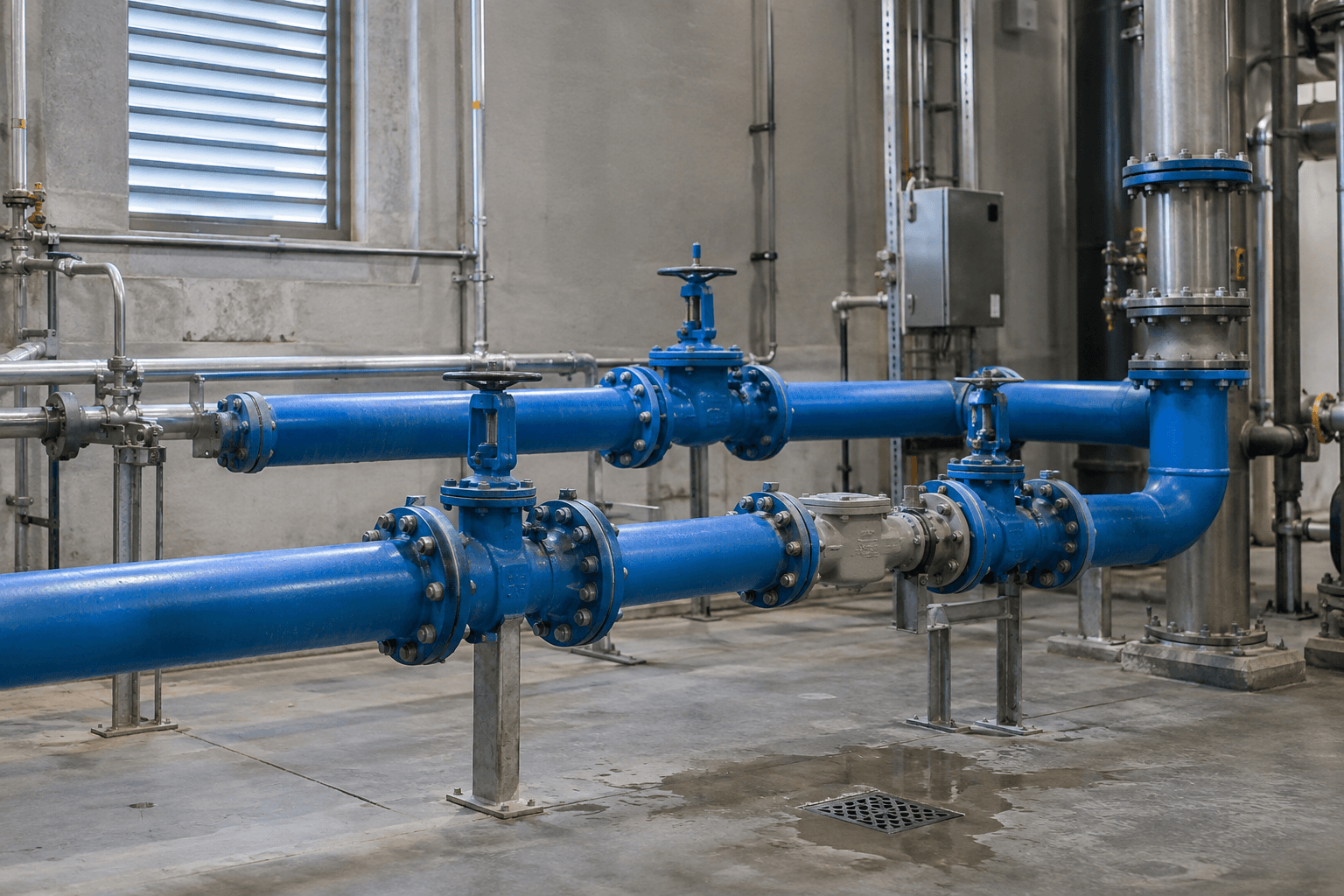
INCOMING WATER & MAKEUP
Start with the water entering your system.
Establish the supply baseline. Follow residual, pH and conductivity changes before they move into storage and cooling circuits.
Explore makeup-water monitoring →
Know your water. From incoming supply to every cooling loop.
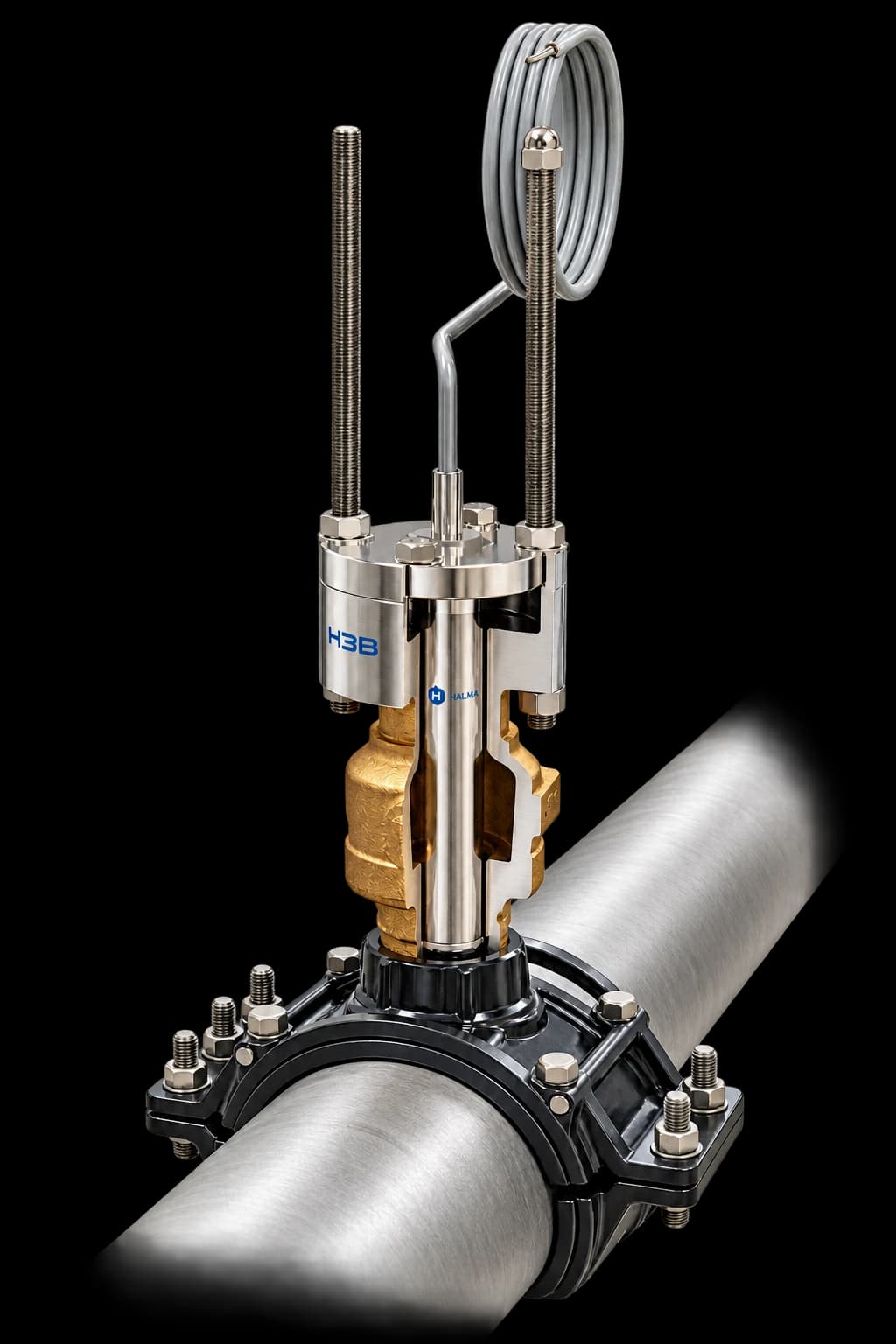
Halogen MP5F measures free chlorine, pH, temperature, conductivity and ORP in one probe. Follow water quality through incoming supply, storage, tower makeup and compatible cooling loops—with low-maintenance sensing and direct installation options that reduce analyzer water loss.
Discuss your application
See the changes a single sample cannot show. Find gaps in your cooling-water monitoring with a practical guide for facilities teams and water treatment partners.
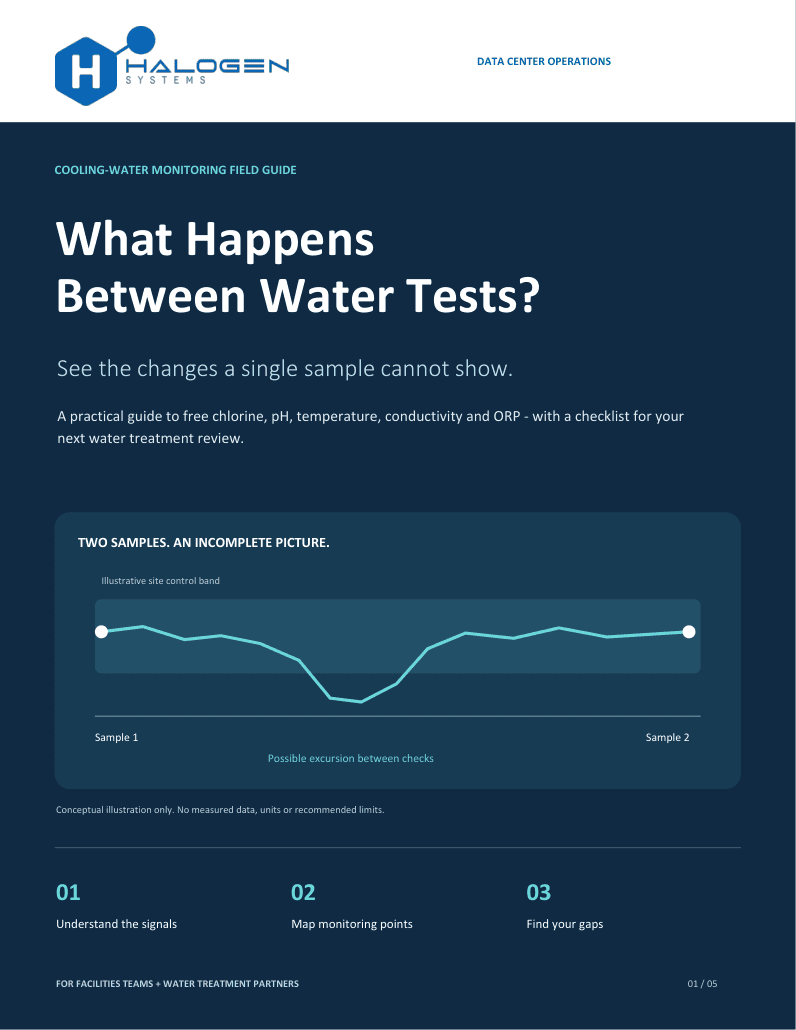
5 pages. One practical checklist.
For data centers with cooling towers or evaporative cooling systems.
Complete the form to access the PDF immediately.
We use your details to process your download request. This form does not subscribe you to marketing emails. Privacy policy.
Water quality evolves through supply, storage and cooling. Select a point to explore how free chlorine, pH, temperature, conductivity and ORP help your team understand the change.
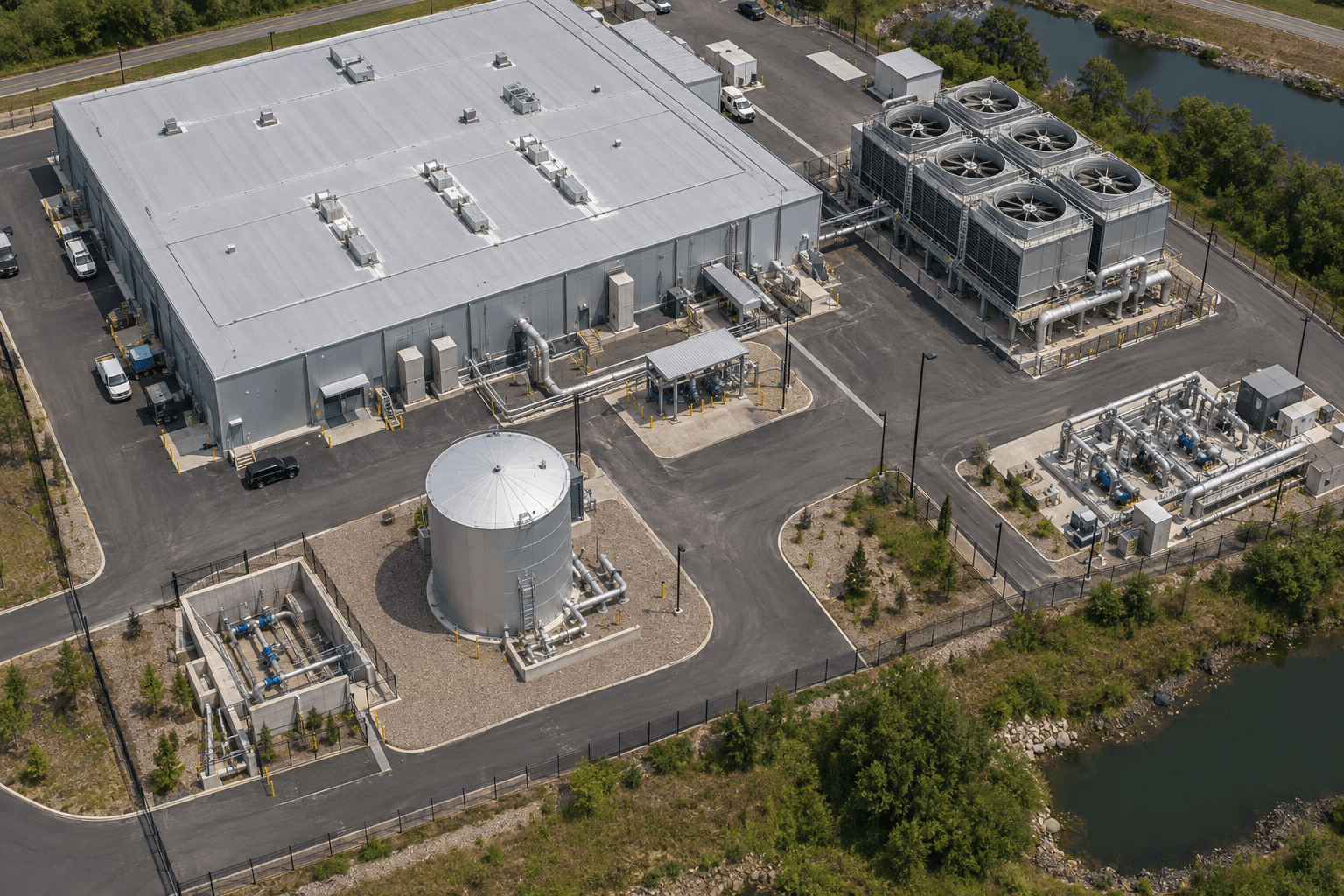 Select a numbered monitoring point
AI-generated representative campus. Monitoring locations are conceptual; confirm against the facility water plan. Server coolant is a separate system.
Establish free chlorine, pH, temperature, conductivity and ORP baselines before storage or treatment. Conductivity and pH shifts can flag a source or blend change; residual and redox trends show the incoming treatment condition.
Compare the inlet with downstream points to separate a supply change from a local loop issue.
Design check: Confirm source disinfectant, measurement ranges, pipe pressure, isolation and service access.
Review this monitoring point →Reagent-free, membrane-free sensing removes reagent replenishment and membrane changes from the analyzer task list. Continuous trends can help target site visits; reference checks and planned maintenance remain part of the job.
SensiCLENE mechanical electrode cleaning and local circulation support measurement in suitable installations. Validate performance in your actual water, then test sensor faults, stale data and alarm response before relying on the system.
Approved direct installation can avoid an analyzer sample-to-drain stream. Compare service hours, consumables and measured discharge before and after a pilot. Tower blowdown savings require a separate treatment and conductivity-control review.
Estimate sample-water savings →Track residual and temperature at selected water-management control points. Use pH to interpret chlorine chemistry, with conductivity and ORP adding context for source and treatment changes. Set operating limits and assign a response when trends depart from them.
MP5F measures water chemistry; it does not detect Legionella. Use the data alongside the program’s inspections, cleaning, reference verification and microbiological testing.
CDC cooling-tower guidance ↗What can your team know when it sees all five parameters together? Explore how free chlorine, ORP, pH, temperature and conductivity can flag changing water conditions and guide a more focused investigation.
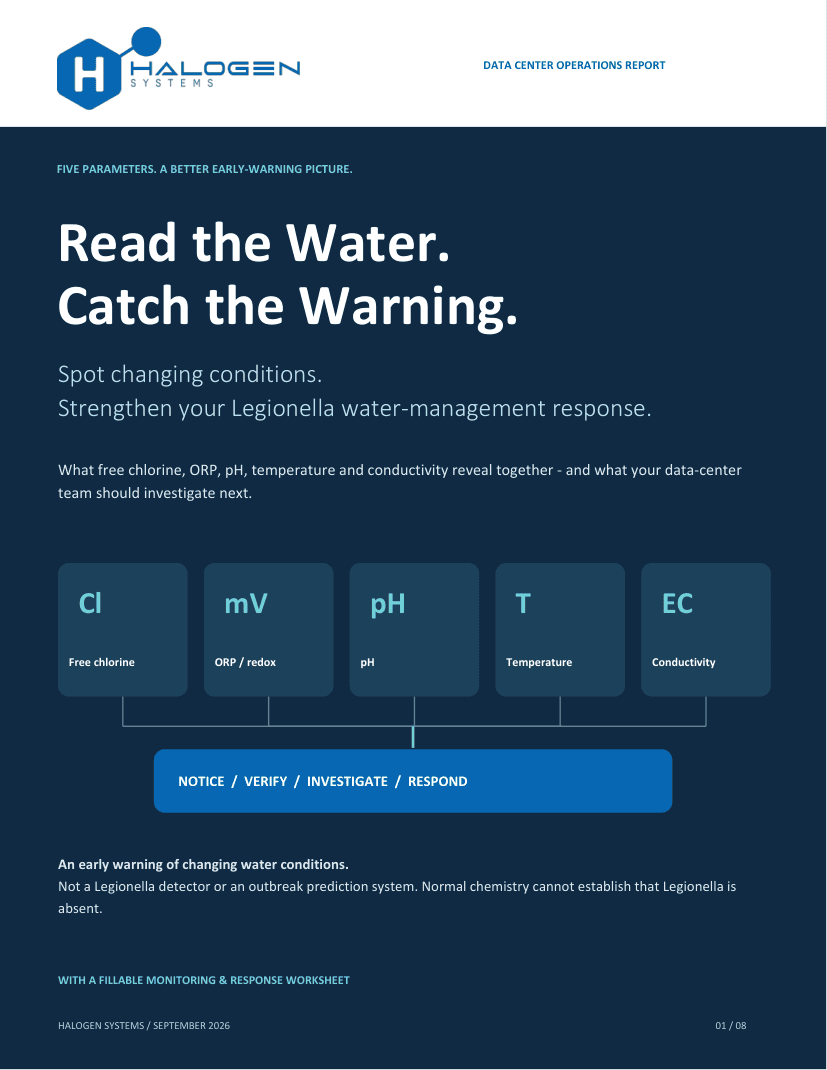
8 pages. Five signals. A practical response plan.
Chemistry trends can flag conditions for investigation. They do not detect Legionella or predict an outbreak.
Complete the form to access the PDF immediately.
We use your details to process your download request. This form does not subscribe you to marketing emails. Privacy policy.
Establish the supply baseline. Follow residual, pH and conductivity changes before they move into storage and cooling circuits.
Explore makeup-water monitoring →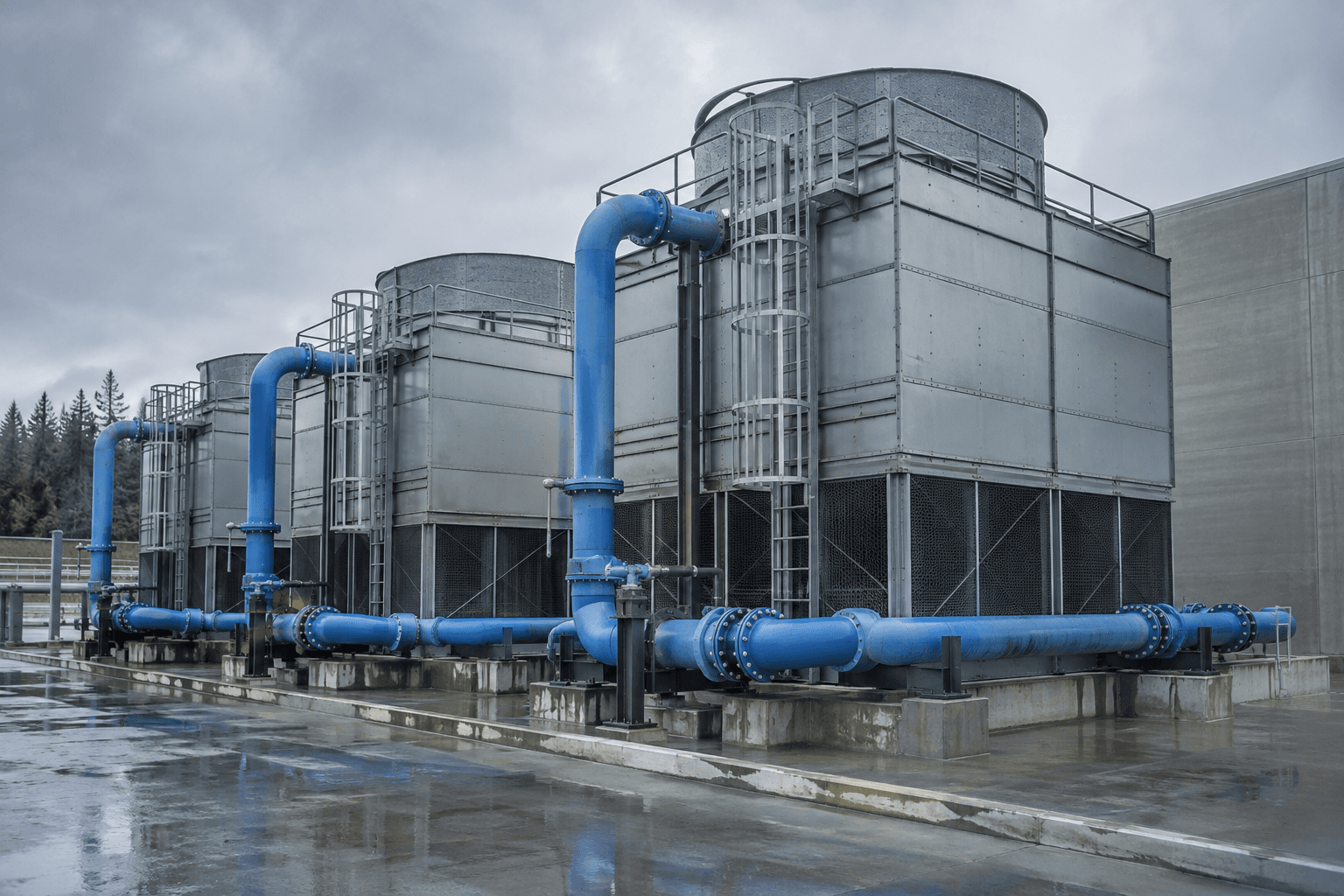
Compare free chlorine, pH, temperature, conductivity and ORP trends with dosing, makeup and blowdown events.
Explore cooling-tower monitoring →Illustrative facility concepts. Monitoring locations and installation details depend on your water system.
A continuous analyzer drain is easy to overlook. Across incoming water, storage and multiple cooling loops, those small streams add up. An approved direct MP5F installation can provide five water-quality measurements without continuously sending a sample to drain.
262,800 liters / point
About 69,424 US gallons from just 0.5 L/min running continuously.
0.5 L/min × 60 × 24 hours × 365 days
2,628,000 liters / year
Potentially avoided continuous drain volume if all ten points move from this example baseline to approved direct measurement with no continuous sample drain.
Illustrative calculation, not a specified analyzer flow or guaranteed saving. Subtract remaining discharge and additional service water. Actual savings depend on measured drain flow, runtime and installation.
Approved in-pipe, tee and immersion arrangements measure in the process water. Internal circulation supports sensing at low or zero bulk flow in suitable installations. Specify safe isolation, removal and reference-sampling access.
Reagent-free and membrane-free sensing removes reagent refill and membrane replacement. SensiCLENE mechanically cleans the electrodes. Include reference checks, inspections and prescribed parts service in the lifecycle comparison.
Makeup and recirculation conductivity trends support a treatment-approved concentration strategy. This is a separate opportunity from removing analyzer drains; blowdown limits still depend on chemistry and equipment requirements.
Monitor free chlorine, pH, temperature, conductivity and ORP across data-center facility water. Explore low-maintenance sensing and analyzer water savings.
DATA-CENTER GUIDEUse free chlorine, pH, temperature, conductivity and ORP trends to understand cooling-tower treatment, concentration and changing operating conditions.
DATA-CENTER GUIDEEstablish incoming and tower-makeup baselines for free chlorine, pH, temperature, conductivity and ORP. Follow source, storage and blending changes.
DATA-CENTER GUIDETrack residual, temperature and water-quality changes at data-center control points. Support a documented Legionella water-management response.
DATA-CENTER GUIDECompare low-maintenance MP5F water-quality monitoring with existing sample drains. Quantify analyzer water savings across your data-center campus.
DATA-CENTER GUIDECalculate annual sample-water savings from direct MP5F installation. Compare drain flow, operating hours and monitoring points, then download your estimate.
DATA-CENTER GUIDEMonitor free chlorine, pH, temperature, conductivity and ORP when data-center water sources or blends change. Compare incoming and cooling-loop conditions.
DATA-CENTER GUIDEUse MP5F conductivity, pH, temperature, free chlorine and ORP trends to support treatment-approved cooling-tower concentration and blowdown decisions.
DATA-CENTER GUIDEInvestigate changing residual with pH, temperature, conductivity and ORP. Compare supply and loop trends, verify samples and check BMS data.
Compare five measurement trends to investigate supply changes, treatment response and concentration in cooling towers.
Combine reagent-free, membrane-free sensing and mechanical electrode cleaning with a clear service plan and BMS point mapping.
Evaluate approved direct installation to avoid continuous sample drains. Calculate annual savings across your monitoring points.
Bring these questions to your application review.
Select MP5F for approved incoming and facility-water applications with relevant free-chlorine measurement. Confirm chemistry, ranges, pressure and mounting at each point. Direct-to-chip coolant, glycol and high-purity closed loops require separate evaluation.
The Halogen MP5F free chlorine sensor measures free chlorine, pH, temperature, conductivity and ORP. Compare trends from incoming supply, storage, tower makeup and compatible recirculating loops to understand source variation, treatment response and changing concentration.
Five measurements in one probe, reagent-free and membrane-free sensing, and mechanical electrode cleaning simplify the monitoring point and reduce recurring analyzer tasks. Confirm the operating envelope, service access, reference checks and controller mapping for the installation.
An approved direct installation avoids a continuous analyzer sample-to-drain stream. An illustrative 0.5 L/min drain running all year totals 262,800 liters per point. Use measured site flow and runtime, then subtract remaining discharge and additional service water.
Application fit depends on the actual water and treatment. Review incoming water and compatible facility cooling circuits, including condenser-water loops. Direct-to-chip coolant, glycol and high-purity closed loops need a separate evaluation.
No. The five measurements support operating decisions and the water-management program; they do not detect Legionella or replace inspections, cleaning and appropriate microbiological testing.
Tell us what you need to measure. We’ll help you find the right starting point.