Find the reason for a low reading
Compare residual trends with dosing events and a reference test. Check treatment demand, sensor condition and the sampling path before changing chemical feed.

Is the residual changing—or is the analyzer struggling?
When water chemistry changes and sensors foul, operators need readings they can act on. Evaluate continuous chlorine monitoring at incoming water, utility loops and compatible process-water points to support treatment decisions, reduce routine analyzer work and investigate changes between manual checks.
Discuss your application
Compare residual trends with dosing events and a reference test. Check treatment demand, sensor condition and the sampling path before changing chemical feed.
Evaluate mechanical self-cleaning and reagent-free, membrane-free measurement against your current cleaning, consumables and callout workload. Measure the difference during a site trial.
Capture treatment cycles and changing water conditions at a representative point. Agree on alarm ownership, reference checks and the response to a missing or suspect signal.
Understand source-water changes.
Evaluate treatment performance at the selected point.
Connect the reading to an operator decision.
Conceptual monitoring sequence. Final placement, detection limits and control actions must be reviewed for your water and equipment.
Mill teams are trying to keep water systems available, manage deposits and microbial growth, and avoid unnecessary chemical adjustments. Fibers, suspended solids, changing furnish and recycled-water conditions can complicate both treatment and measurement. Residual is one part of the picture; it does not measure slime or prove biological control.
SensiCLENE mechanically cleans the sensing surfaces. Test whether this reduces cleaning interventions and improves agreement with your reference method in the proposed stream. It does not remove bulk fibers or guarantee a blockage-free installation.
Trend the supported residual species downstream of adequate mixing and at a relevant water user. Compare it with treatment events, pH and operating changes. Do not interpret chemical feed rate—or ORP alone—as chlorine concentration.
Evaluate direct in-pipe or immersion mounting where conditions allow. This may reduce sample-line upkeep and transport delay. If a side stream is needed, measure its delay and check that conditioning does not change the residual.
Begin with incoming treated water, a clarified-water outlet, utility storage or a compatible cooling-water circuit. A white-water or reuse stream needs a separate review of solids, oxidant demand, interferences and cleaning access before a trial.
Compare valid-data availability, reference agreement, cleaning time, consumables and maintenance interventions. Include grade changes, dosing cycles and shutdown/restart conditions. Keep existing treatment safeguards during the pilot; do not connect an unvalidated signal directly to chemical dosing.
Application background: Buckman mill microbiological-control guidance · Solenis treatment-chemistry overview. These describe mill treatment challenges, not Halogen performance claims.
The Pulp & Paper Residual Monitoring Kit helps your operations, maintenance and water-treatment teams choose a point, document the chemistry and agree on a go/no-go trial.
Bring these questions to your application review.
Confirm the exact oxidant, materials, measurement range and matrix before specifying a sensor. Self-cleaning does not establish compatibility with high-consistency stock, bleach liquor, heavy fiber loading or every biocide. Start with a representative, serviceable location and validate the complete installation through normal and upset conditions.
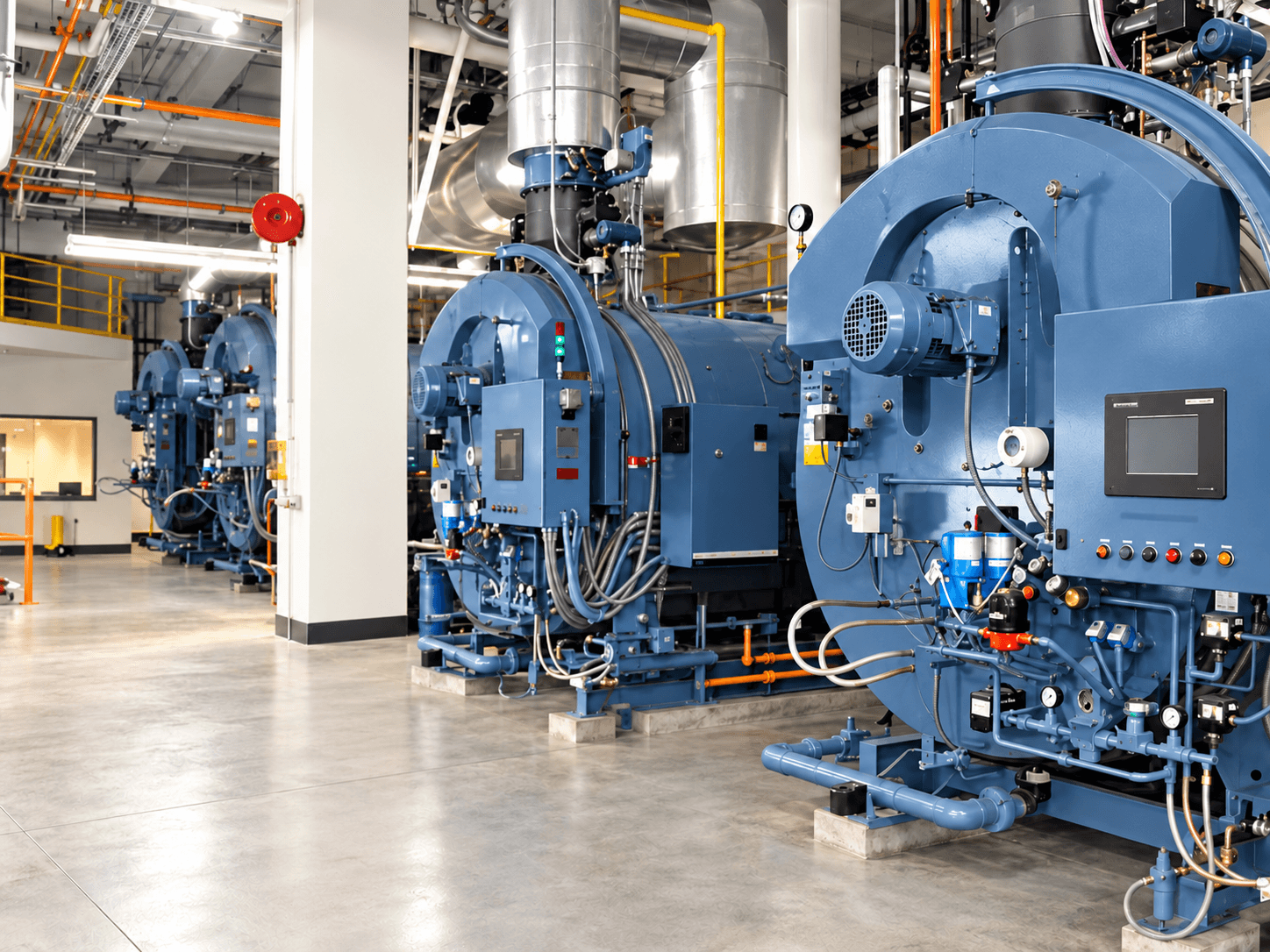
Track incoming disinfectant and evaluate chlorine removal in boiler makeup-water pretreatment. Define monitoring points, detection requirements and operator response.
Evaluate chlorine monitoring for plant utility water, process skids and internal distribution. Plan installation, verification and PLC integration together.
Plan chlorine monitoring around carbon treatment and RO feed water. Define residual species, low-level measurement requirements and breakthrough response.
No. It measures the supported residual species at its location. Keep microbiological testing, deposit inspections and the treatment supplier’s performance checks. Use residual trends to investigate conditions, not as proof of biological control.
Mechanical cleaning addresses sensing surfaces; it does not remove bulk fibers or guarantee compatibility with every mill stream. Review solids loading, deposits, access and cleaning exposure. Prove performance against an agreed reference method at the actual point.
Provide the active species, blend, feed strategy and expected concentration. Halogen and the treatment supplier must confirm measurement compatibility, interferences and configuration. Do not assume that a chlorine sensor measures every oxidant or non-oxidizing biocide.
First validate the measurement, signal quality, response time and controls integration. Agree on alarm limits, loss-of-signal handling, interlocks and operator verification. Keep a pilot in monitoring mode until the complete control strategy is approved.
Measure service hours, consumables, sample-water use, valid-data availability and reference agreement over equivalent duties and periods. Chemical savings and production improvements require separate evidence; neither is guaranteed by installing a sensor.
Tell us what you need to measure. We’ll help you find the right starting point.