
Know your water. From incoming supply to every cooling loop.
Water quality changes as water enters your campus, sits in storage and circulates through cooling towers. The Halogen MP5F free chlorine sensor measures free chlorine, pH, temperature, conductivity and ORP in one probe—giving your team a clearer view of treatment, source changes and conditions in each compatible cooling-water loop.
Plan My Water-Quality Monitoring ↗
Know what is changing.
Follow free chlorine, pH, temperature, conductivity and ORP between scheduled checks. Connect changes to supply, treatment and operating events.
Find the loop that needs attention.
Compare incoming water, storage, tower makeup and recirculating loops. Give the team a location and a specific question to investigate.
Specify less routine service and water loss.
Combine five measurements with reagent-free, membrane-free sensing. Evaluate direct installation to eliminate a continuous analyzer drain.
What Happens
Between Water Tests?
See the changes a single sample cannot show. Find gaps in your cooling-water monitoring with a practical guide for facilities teams and water treatment partners.
- Understand free chlorine, pH, temperature, conductivity and ORP.
- Map representative cooling-water monitoring points.
- Use the fillable checklist to agree on your next steps.
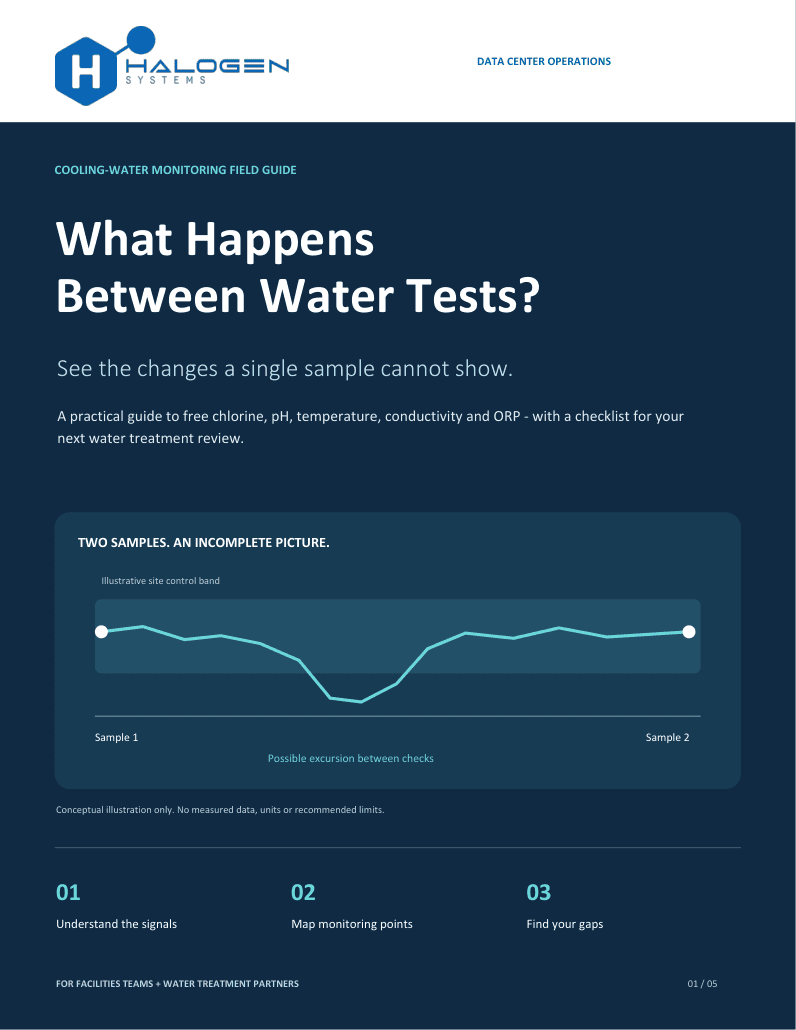
5 pages. One practical checklist.
For data centers with cooling towers or evaporative cooling systems.
Get your free guide
Complete the form to access the PDF immediately.
We use your details to process your download request. This form does not subscribe you to marketing emails. Privacy policy.
Follow the water. Find the change.
Water quality evolves through supply, storage and cooling. Select a point to explore how free chlorine, pH, temperature, conductivity and ORP help your team understand the change.
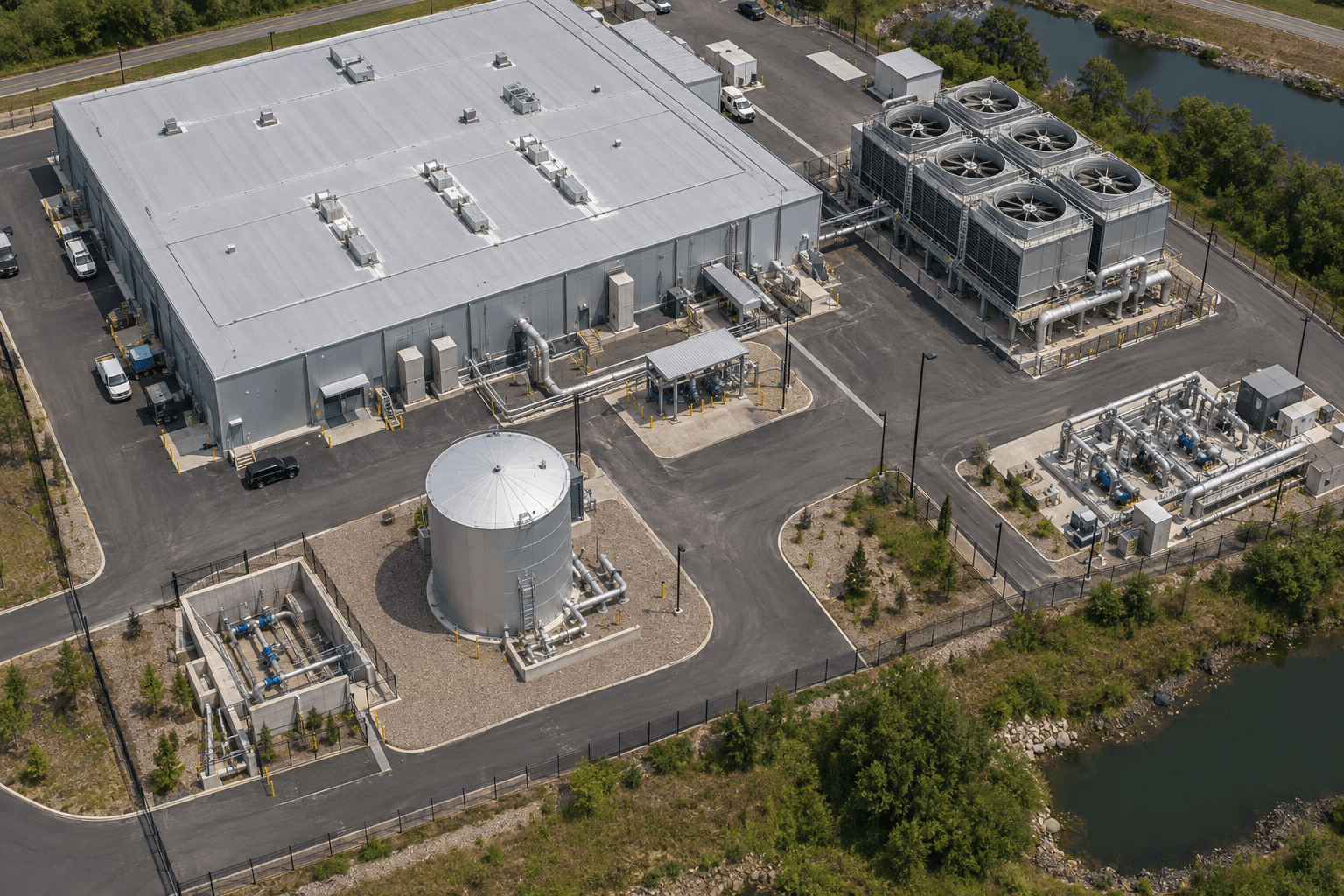 Select a numbered monitoring point
AI-generated representative campus. Monitoring locations are conceptual; confirm against the facility water plan. Server coolant is a separate system.
Incoming water
Has the water arriving at our campus changed?
Establish free chlorine, pH, temperature, conductivity and ORP baselines before storage or treatment. Conductivity and pH shifts can flag a source or blend change; residual and redox trends show the incoming treatment condition.
The operator’s next step
Compare the inlet with downstream points to separate a supply change from a local loop issue.
Design check: Confirm source disinfectant, measurement ranges, pipe pressure, isolation and service access.
Review this monitoring point →Spend time on exceptions.
Reagent-free, membrane-free sensing removes reagent replenishment and membrane changes from the analyzer task list. Continuous trends can help target site visits; reference checks and planned maintenance remain part of the job.
Design for real cooling water.
SensiCLENE mechanical electrode cleaning and local circulation support measurement in suitable installations. Validate performance in your actual water, then test sensor faults, stale data and alarm response before relying on the system.
Count the water and labor.
Approved direct installation can avoid an analyzer sample-to-drain stream. Compare service hours, consumables and measured discharge before and after a pilot. Tower blowdown savings require a separate treatment and conductivity-control review.
Estimate sample-water savings →Know when conditions need a closer look.
Track residual and temperature at selected water-management control points. Use pH to interpret chlorine chemistry, with conductivity and ORP adding context for source and treatment changes. Set operating limits and assign a response when trends depart from them.
MP5F measures water chemistry; it does not detect Legionella. Use the data alongside the program’s inspections, cleaning, reference verification and microbiological testing.
CDC cooling-tower guidance ↗Read the Water.
Catch the Warning.
What can your team know when it sees all five parameters together? Explore how free chlorine, ORP, pH, temperature and conductivity can flag changing water conditions and guide a more focused investigation.
- Recognize five example patterns worth investigating.
- Compare supply, storage, tower and remote-loop conditions.
- Turn a warning into action with a fillable response worksheet.
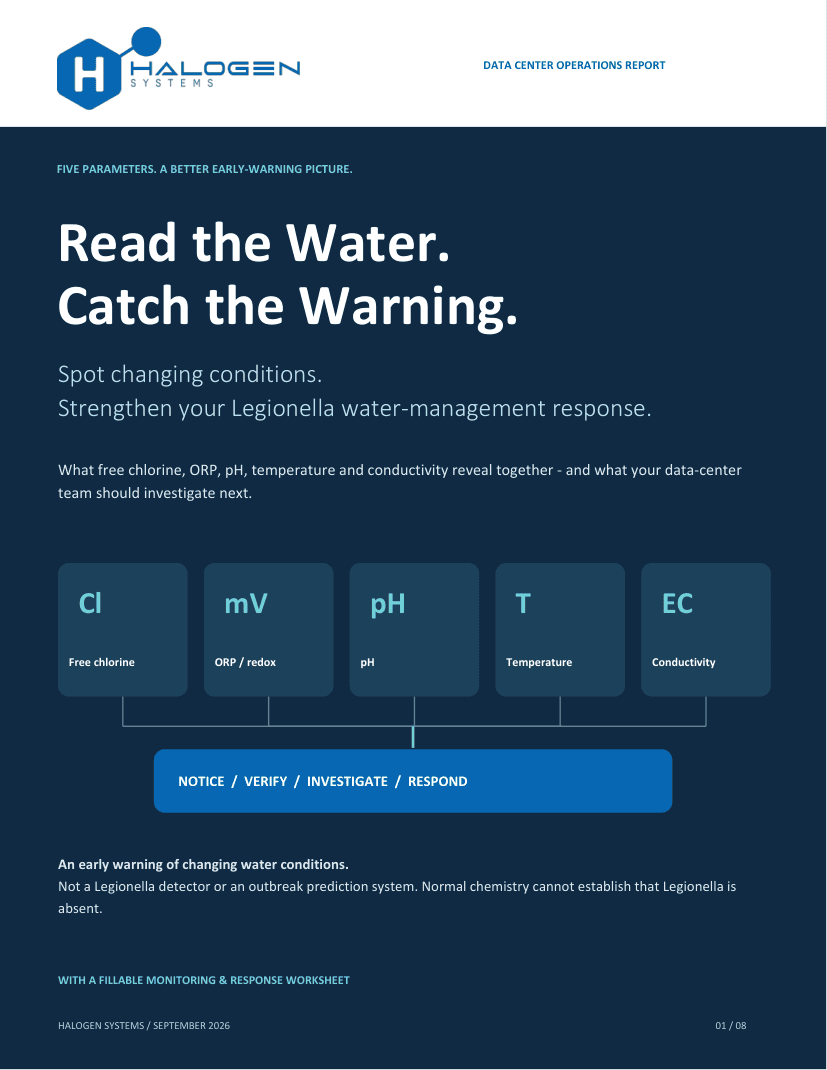
8 pages. Five signals. A practical response plan.
Chemistry trends can flag conditions for investigation. They do not detect Legionella or predict an outbreak.
Get your free report
Complete the form to access the PDF immediately.
We use your details to process your download request. This form does not subscribe you to marketing emails. Privacy policy.
Different locations. Different operating questions.
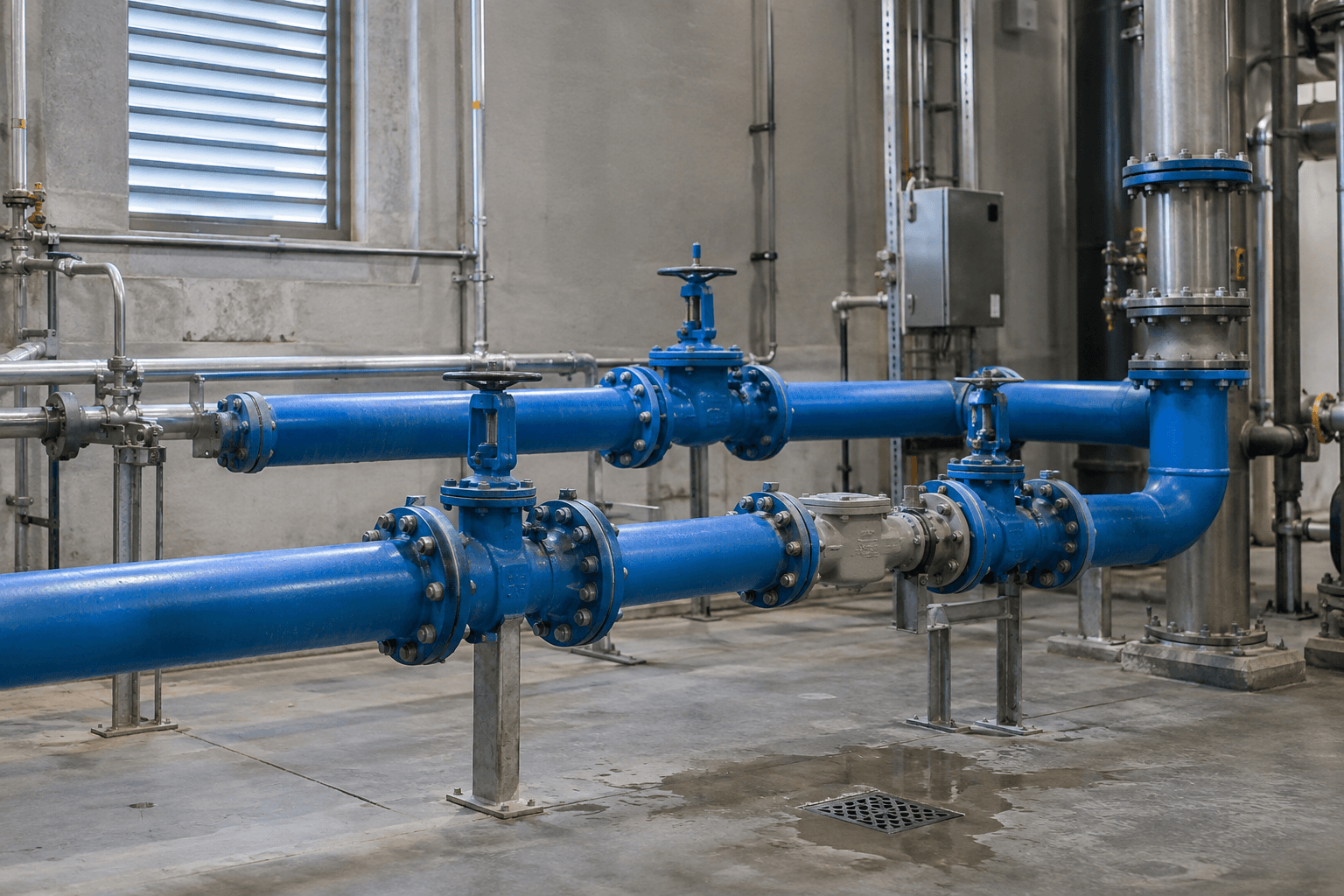
Start with the water entering your system.
Establish the supply baseline. Follow residual, pH and conductivity changes before they move into storage and cooling circuits.
Explore makeup-water monitoring →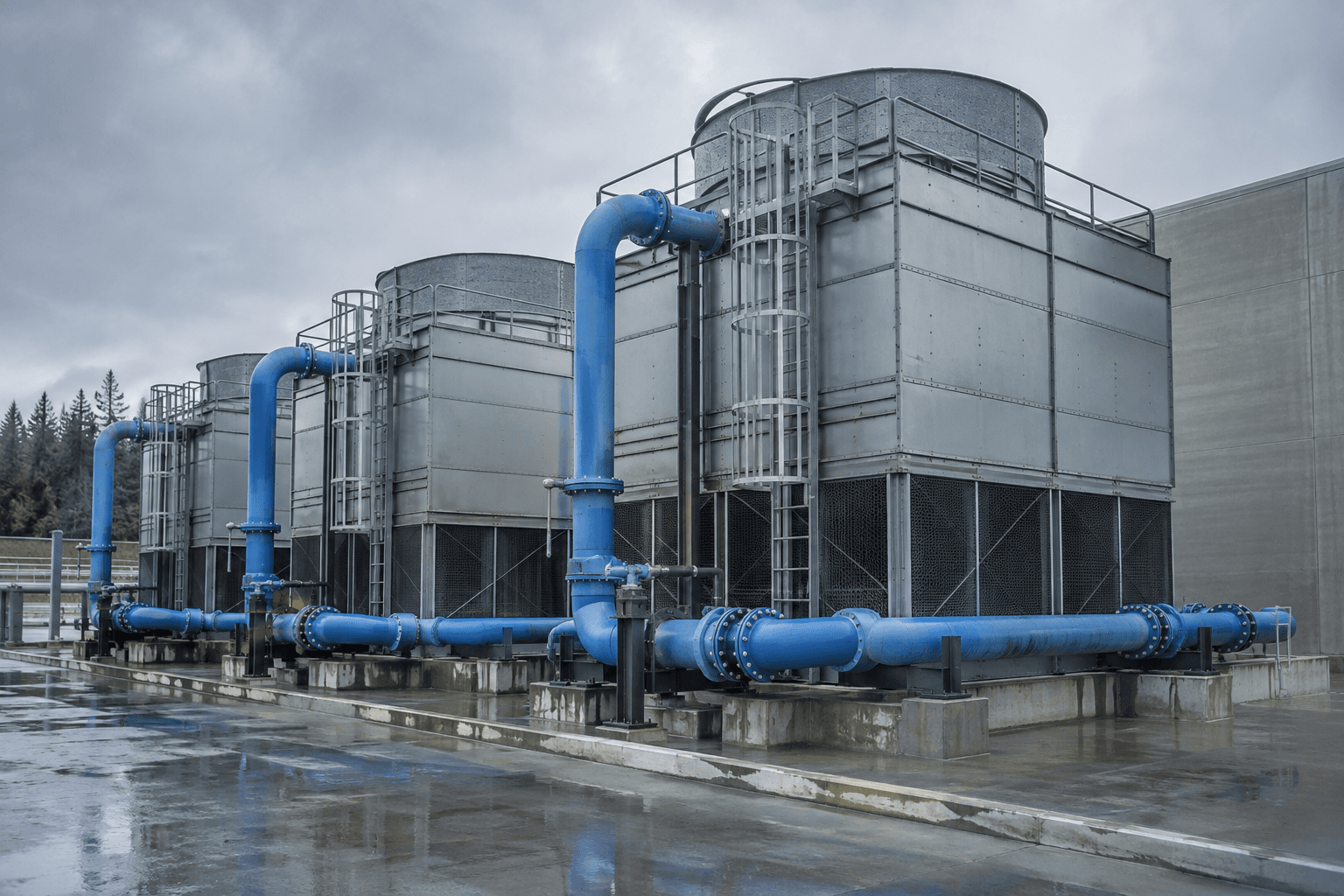
See what changes as cooling demand changes.
Compare free chlorine, pH, temperature, conductivity and ORP trends with dosing, makeup and blowdown events.
Explore cooling-tower monitoring →Illustrative facility concepts. Monitoring locations and installation details depend on your water system.
Five measurements. One clearer view of your water.
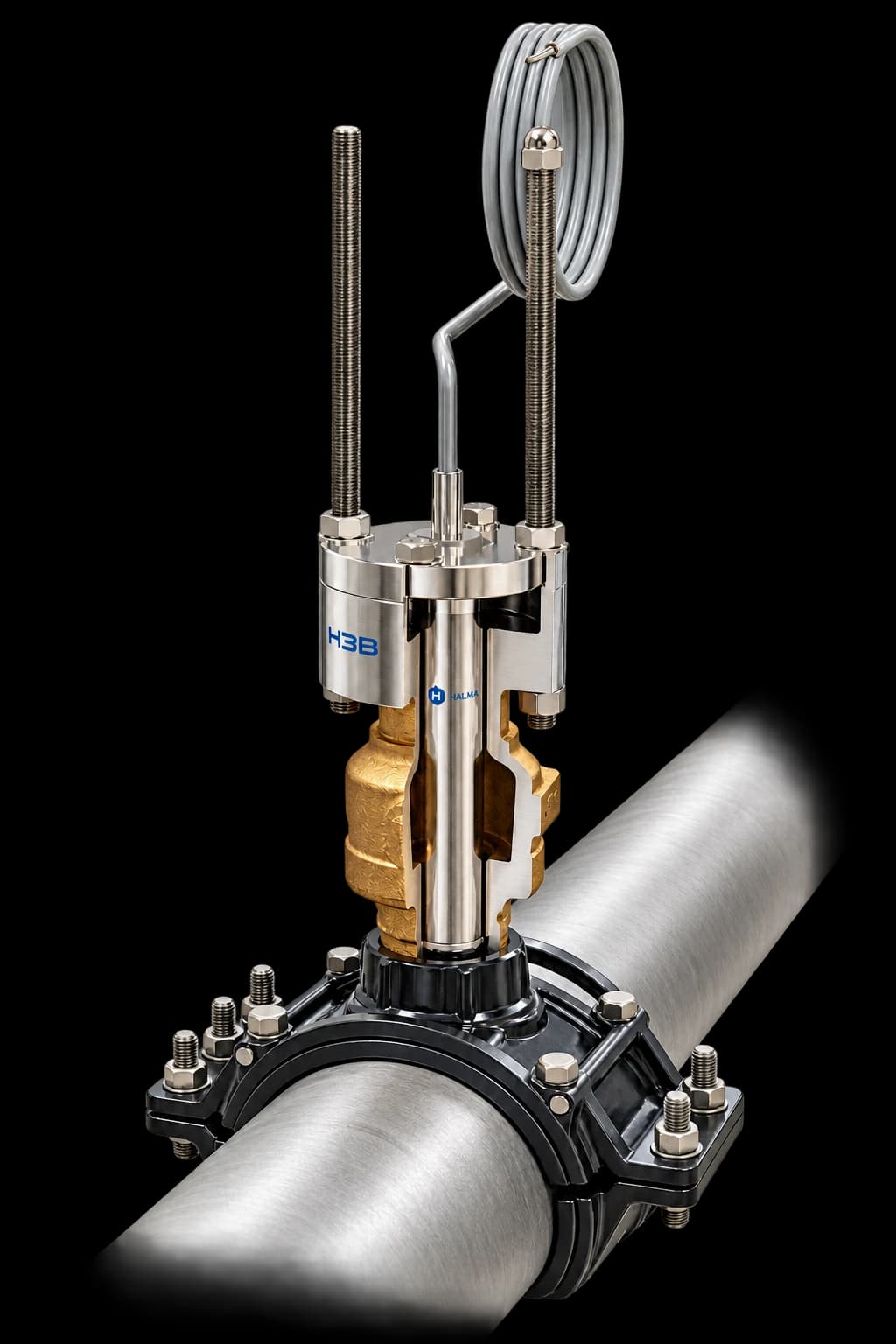
The Halogen MP5F—MP5 free chlorine sensor—measures free chlorine, pH, temperature, conductivity and ORP in one probe. Each answers a different operating question. Together, their trends help explain where water quality is changing and what to check next.
| Measurement | Operator question | Why it matters | Put it to work |
|---|---|---|---|
| Free chlorine | Is the intended residual reaching this point? | Follow feed response, chlorine demand and changes through distribution. | Compare incoming, storage-outlet and loop readings with dosing records. |
| pH | Has chemistry moved outside our treatment targets? | Understand conditions affecting chlorine effectiveness and the scale/corrosion treatment program. | Review source changes and treatment feed with the water-treatment provider. |
| Temperature | What changes with load, standby or storage? | Identify thermal changes relevant to treatment and the water-management plan. | Compare active and idle loops and investigate warming with residual loss. |
| Conductivity | How is the water concentrating or changing? | Track dissolved-ion concentration and establish the makeup baseline for tower operation. | Compare makeup and tower trends with the approved blowdown limits. |
| ORP / redox | How are oxidizing or reducing conditions changing? | Add context to dose response and changing water chemistry. | Review alongside free chlorine and pH; ORP is not a chlorine concentration. |
Sense it. Connect it. Put someone in charge of the response.
Match the installation to the water first, then define how the team receives and acts on the data.
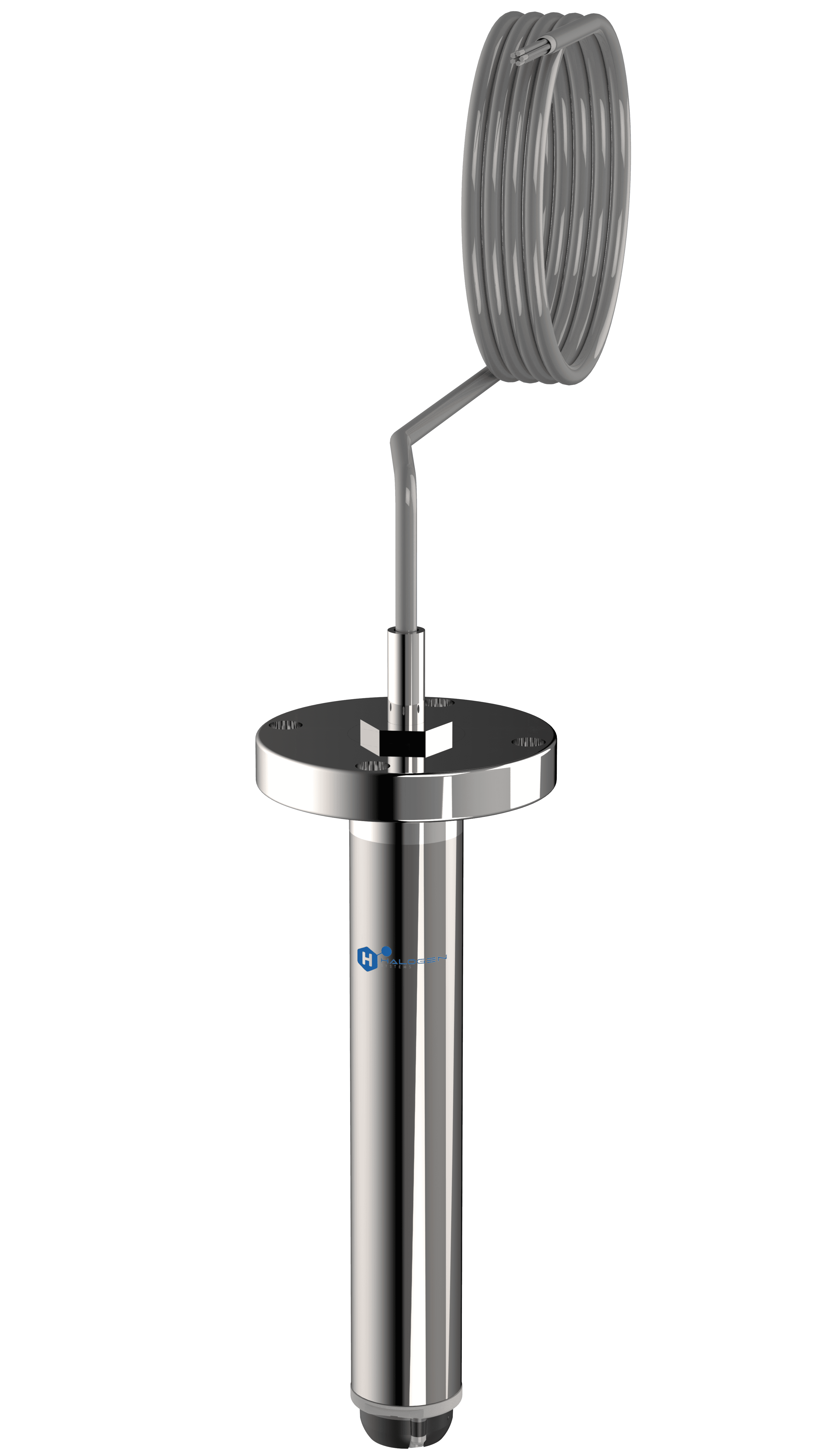
Five parameters. One MP5F.
Free chlorine, pH, temperature, conductivity and ORP with reagent-free, membrane-free sensing and SensiCLENE mechanical electrode cleaning. Fewer recurring analyzer tasks across your monitoring points.
Explore MP5F →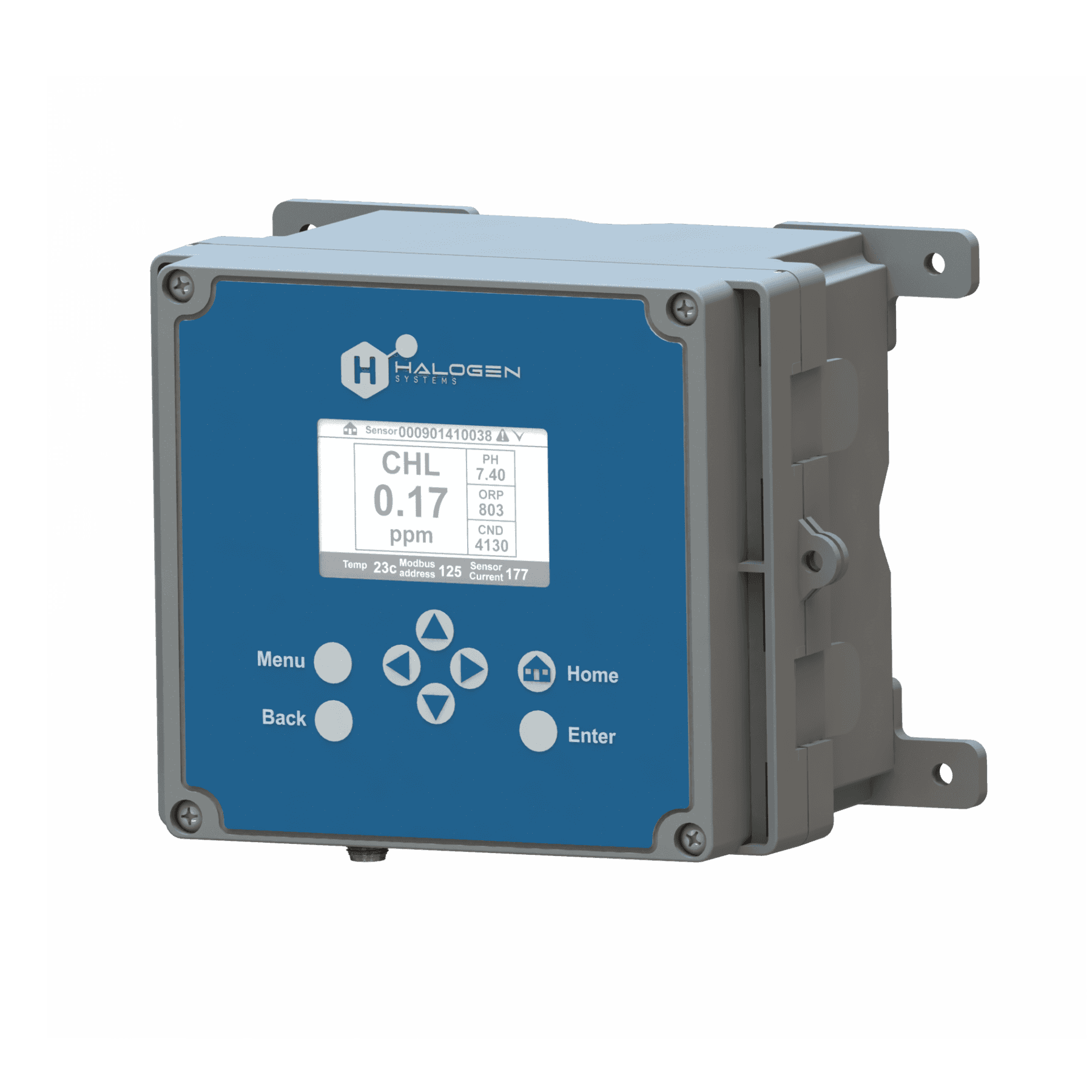
D20 and facility controls
Specify the approved controller interface and point mapping. Bring readings, available status and timestamps into the BMS or receiving system.
Review controller options →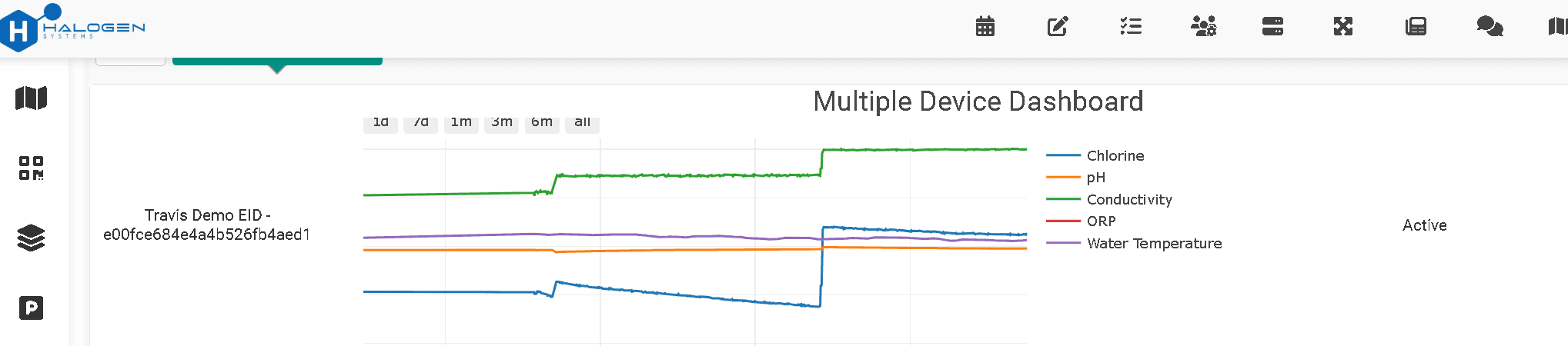
Local operations or remote visibility
Assign alarm ownership and a response procedure. Optional cloud monitoring can extend visibility where the selected connection and site network policy allow it.
Explore remote monitoring →Specify MP5F for approved incoming and facility-water applications, including compatible free-chlorine cooling programs. Direct-to-chip coolant, glycol and high-purity closed loops require a separate review. These five measurements support treatment decisions; they do not directly measure bacteria, scale or corrosion.
Prove the fit before expanding across the campus.
Use a short pilot plan to agree on what success means with operations, water treatment and controls. Choose an evaluation period that includes normal load changes, dosing and standby conditions.
Download the pilot worksheet ↓Editable CSV · opens in Excel or Sheets · no signup required
- Establish the baseline.Record the current verification results, service hours, consumables and measured sample-drain flow.
- Validate the measurement.Compare online and reference results at the same point. Agree on acceptable deviation and test representative operating conditions.
- Exercise the response.Test alarms, sensor faults and communications loss. Assign who investigates and records the outcome.
- Decide with evidence.Review data availability, maintenance effort and net sample-water use before selecting additional points.
Measure your water.
Keep more of it in the system.
A continuous analyzer drain is easy to overlook. Across incoming water, storage and multiple cooling loops, those small streams add up. An approved direct MP5F installation can provide five water-quality measurements without continuously sending a sample to drain.
262,800 liters / point
About 69,424 US gallons from just 0.5 L/min running continuously.
0.5 L/min × 60 × 24 hours × 365 days
At 10 identical points
2,628,000 liters / year
Potentially avoided continuous drain volume if all ten points move from this example baseline to approved direct measurement with no continuous sample drain.
Illustrative calculation, not a specified analyzer flow or guaranteed saving. Subtract remaining discharge and additional service water. Actual savings depend on measured drain flow, runtime and installation.
Remove the continuous sample drain.
Approved in-pipe, tee and immersion arrangements measure in the process water. Internal circulation supports sensing at low or zero bulk flow in suitable installations. Specify safe isolation, removal and reference-sampling access.
Reduce recurring analyzer tasks.
Reagent-free and membrane-free sensing removes reagent refill and membrane replacement. SensiCLENE mechanically cleans the electrodes. Include reference checks, inspections and prescribed parts service in the lifecycle comparison.
Use conductivity to inform treatment.
Makeup and recirculation conductivity trends support a treatment-approved concentration strategy. This is a separate opportunity from removing analyzer drains; blowdown limits still depend on chemistry and equipment requirements.
Engineering details: BMS integration, interfaces and commissioning
Connect water measurements to the systems your team uses.
Give each incoming-water, storage and cooling-loop point a clear identity. Trend free chlorine, pH, temperature, conductivity and ORP alongside dosing and equipment events so operators can compare locations and identify what changed. Include data freshness and available sensor status in the view.
| Integration layer | Typical interfaces and role | What to specify for water monitoring |
|---|---|---|
| Facility OT | BACnet for building automation; Modbus RTU over RS-485 or Modbus TCP over Ethernet for controller data; 4–20 mA for a scaled analog measurement. | Confirm the receiving controller, supported protocol variant, point list and interface hardware. A 4–20 mA loop is an analog signal, not a network protocol; diagnostics need a separate agreed path. |
| IT instrumentation | SNMP is used by compatible infrastructure-monitoring platforms. Redfish provides a standardized management interface for supported IT equipment, including servers. | Do not assume an IT monitoring protocol is available on a water sensor. Verify the DCIM driver or use a supported BMS, controller or gateway to expose the required water points. |
| Edge / cloud integration | MQTT publish/subscribe messaging and HTTPS APIs can connect compatible gateways, historians and analytics services. | Specify the gateway or service, data model, authentication, timestamps, buffering and communications-loss behavior. These integration patterns do not imply native Halogen MQTT or Redfish support. |
How does Halogen connect to a BMS or DCIM platform?
Specify the path for all five measurements. Four analog outputs alone cannot carry five separate measurement channels; confirm the digital point mapping or other approved arrangement for the complete water-quality view.
The published D20 controller configuration includes four 4–20 mA outputs and Modbus RTU (RS-485) on the sensor bus. Selectable communication daughter boards include BACnet and Modbus TCP. One communication daughter board is installed per controller, alongside the standard analog outputs. Confirm the upstream interface, BACnet transport, available objects or registers, and ordered configuration with Halogen before specifying the connection.
A typical integration path is: water sensor → D20 controller → compatible BMS/PLC or gateway → DCIM or historian. A cloud connection is optional. Verify the receiving platform's driver and data mapping; a DCIM system does not necessarily accept BACnet directly. Native SNMP, Redfish and MQTT support is not established by the D20 information cited here.
Commission the data, alarms and failure behavior
- Define each point's name, location, analyte, units, scale and permitted read/write access. Document the analog range or register/object mapping.
- Agree on sampling and polling intervals, timestamps, stale-data detection and how available fault or maintenance status reaches the operator.
- Assign alarm thresholds, delays, acknowledgement and response ownership. Test a simulated communications loss and recovery during commissioning.
- Coordinate network segmentation, firewall rules, credentials and remote access with the site's OT/IT teams. Keep treatment interlocks and essential control behavior local to the approved control design.
- Confirm which selected interfaces expose diagnostics; do not assume every protocol carries the same information.
Protocol references: BACnet International, Modbus Organization, Schneider Electric DCIM compatibility example, DMTF Redfish, and MQTT.
Answer the questions your operations team asks every day
Has our incoming water changed? Is treatment reaching the far end of the distribution system? Why is one tower behaving differently? Continuous water-quality trends help your team connect a changing measurement to its location and operating conditions, then decide where to investigate.
Plan monitoring from the supply connection through storage, tower makeup and individual recirculating loops. Compare water quality before and after key changes—blending, storage, dosing and heat rejection—so the team can distinguish a campus-wide source event from a local treatment or circulation issue.
Put water-quality visibility where decisions are made
| Location | What to watch | What the team learns |
|---|---|---|
| Incoming water | Free chlorine, pH, conductivity, temperature and ORP baseline | Recognize supply or blend changes before interpreting downstream treatment results. |
| Storage and distribution outlets | Residual and ORP trends, temperature and shifts in pH or conductivity | Investigate changes during storage, low use or source switching; compare inlet and outlet conditions. |
| Tower makeup | Conductivity and pH alongside incoming residual and temperature | Establish the water entering each cooling circuit and the baseline for concentration management. |
| Tower basin / recirculation | All five parameters across dosing, load and blowdown cycles | Review treatment response, concentration changes and operating conditions at a well-mixed point. |
| Condenser-water and remote facility loops | Compare the five trends between representative loop locations | Identify which loop diverges during operation, standby or restart and prioritize investigation. |
Choose points on the facility-water side of the cooling system. Direct-to-chip coolant, glycol mixtures and high-purity closed loops need their own chemistry and instrumentation review. Free-chlorine measurement belongs where that analyte is relevant to the treatment program.
Five measurements in one Halogen MP5F sensor
Halogen MP5F, the MP5 free chlorine sensor, measures free chlorine, pH, temperature, conductivity and ORP. Use the measurements together to understand changes instead of interpreting a single number in isolation.
- Free chlorine: follow disinfectant residual and investigate changes in feed, demand or distribution.
- pH: understand conditions that affect chlorine effectiveness and the site’s scale/corrosion treatment strategy.
- Temperature: follow thermal changes through storage and cooling loops, including low-use and restart periods.
- Conductivity: track dissolved-ion concentration, changing makeup sources and the information used in a treatment-approved blowdown strategy.
- ORP / redox: follow changes in oxidizing or reducing conditions alongside residual and pH. ORP adds context; it is not a free-chlorine concentration or a microbial test.
Why specify Halogen for distributed monitoring?
- Five measurements in one probe simplify the physical monitoring point and bring related water-quality trends together.
- Reagent-free, membrane-free sensing removes routine reagent replenishment and membrane replacement from the service plan.
- SensiCLENE mechanical electrode cleaning helps maintain sensing surfaces between scheduled inspections.
- Internal circulation supports measurement at low or zero bulk flow in suitable installations, useful when facility branches cycle or sit on standby.
- Approved in-pipe, tee or immersion installations can avoid a continuous analyzer sample drain and its associated sample piping.
Specify the complete assembly for actual chemistry, temperature, pressure, materials and service access. Keep reference checks and manufacturer-prescribed service in the plan; agree on intervals using the application rather than assuming a drinking-water service interval applies to tower water. Explore the MP5F sensor.
Give operators a water-quality view of every loop
Trend the five measurements by location in the BMS or historian alongside dosing, makeup, blowdown and equipment status. A change at the inlet and every downstream point suggests a different investigation from a change confined to one tower. Time-aligned records make that distinction easier.
Select the D20 controller interface and document units, scaling, point names, timestamps and available instrument status. Confirm that the chosen digital interface carries all required parameters; four analog outputs alone do not provide five separate measurement channels.
Assign an owner and response for each alarm. Commission high/low limits, sensor faults and stale-data behavior with operations and the treatment provider. Chemical-feed and blowdown actions require an engineered control strategy and interlocks.
Save analyzer water without giving up continuous visibility
A small sample stream becomes a large annual volume when it runs all day. At an illustrative 0.5 L/min, one sample-to-drain point discharges 262,800 liters—about 69,424 US gallons—per year. Ten identical points discharge 2,628,000 liters. These figures assume 24 hours a day for 365 days.
An approved direct MP5F installation measures in the water and can remove that continuous analyzer drain. Subtract any remaining drain flow and additional service water to calculate net savings. Use the sample-water calculator with measured site values.
There are two separate water opportunities: eliminate unnecessary analyzer discharge through the installation design, and use conductivity trends to support treatment-approved tower concentration management. The sensor alone does not determine safe cycles of concentration or eliminate evaporation and required blowdown.
Make changing water conditions visible between checks
Free chlorine and temperature trends help the water-management team follow operating conditions at selected control points. pH helps interpret treatment conditions; conductivity and ORP add useful context when the water changes. Establish site-specific limits, response owners and records.
MP5F does not detect Legionella. Continuous chemistry monitoring supports the water-management program alongside inspections, cleaning, reference testing and microbiological testing where required. See CDC cooling-tower guidance.
Specify the measurement, maintenance and water use together
- List all five required measurements, units, ranges and accuracy requirements at each location.
- Document source water, disinfectant, additives, normal and upset conditions, pressure, temperature and flow—including standby.
- Select approved mounting, isolation and removal arrangements with safe access and a representative reference-sampling point.
- State whether sample water stays in the process, returns to it or drains. Include allowable continuous drain flow in the specification.
- Define reference verification, cleaning/parts service and the maintenance records required for acceptance.
- Confirm controller interfaces, all five measurement mappings, diagnostics, timestamps and alarm ownership.
- Evaluate a representative point through dosing, load changes and restart before standardizing across towers.
Choose a practical starting point
- Estimate analyzer sample-water loss when replacing sample-to-drain monitoring.
- Review reclaimed-water monitoring when evaluating a new supply or blend.
- Investigate cooling tower blowdown with the treatment and controls teams.
- Troubleshoot chlorine measurements when readings are unstable or disagree with references.
These guides focus on facility water where the selected sensor and chemistry are compatible. They do not establish compatibility with proprietary server coolants or all biocide programs.
Follow the heat exchanger to the right water loop
A liquid-cooled data center can still use a separate facility-water circuit and evaporative heat rejection. Map the server coolant, heat exchanger, condenser-water loop and tower circuit separately. Each has different chemistry, materials and operating limits.
Start the MP5F review with incoming water, storage and compatible facility cooling-water circuits. Confirm the need for free-chlorine measurement and suitability of the other parameters at each point; server coolant requires a separate evaluation.
Build the BMS point list before procurement
Download the BMS/DCIM point-list template. It provides fields for units, source, protocol, address, update interval, quality status and alarm ownership. The rows are planning examples; the selected device configuration determines which points are available.
Bring the completed list to the application review. Confirm the D20 interface and receiving-system driver, rather than specifying an unsupported protocol simply because the DCIM platform uses it.
Questions & answers
What does the Halogen MP5F measure?
The Halogen MP5F (MP5 free chlorine sensor) measures free chlorine, pH, temperature, conductivity and ORP / redox in one probe. Confirm model-specific ranges and compatibility with the water and treatment chemistry at each monitoring point.
Where should a data center monitor water quality?
Useful locations include incoming water, storage outlets, tower makeup, well-mixed tower basins or recirculation lines, and remote facility-water loops. Select points that answer an operating question and compare trends across the distribution system. Server coolant needs a separate compatibility review.
Why measure more than free chlorine?
pH affects chlorine chemistry and treatment decisions; temperature shows changing thermal conditions; conductivity tracks dissolved-ion concentration; and ORP shows oxidizing/reducing changes. Together the trends help operators investigate source changes, dosing response and differences between loops.
How does Halogen reduce maintenance?
Reagent-free, membrane-free sensing removes reagent refill and membrane replacement tasks. SensiCLENE mechanically cleans the electrodes. Reference verification, inspections and prescribed parts service remain necessary, with the schedule determined for the actual water and installation.
How can the sensor save water?
An approved direct in-pipe or immersion installation can avoid a continuous analyzer sample-to-drain stream. At an illustrative 0.5 L/min running all year, that stream totals 262,800 liters per point before deducting remaining discharge or additional service water. Cooling-tower blowdown and evaporation are separate.
Does MP5F detect Legionella?
No. Its chemistry measurements help track operating conditions in the site water-management program. They do not detect Legionella or replace cleaning, inspections, reference verification or microbiological testing required by the program.
Plan your water-quality monitoring points.
Bring your water sources, cooling-loop layout and treatment program. We can help review five-parameter MP5F monitoring, low-maintenance installation options, sample-water savings and the data your operations team needs.
Follow the water through your facility.
Understand the water in every cooling tower.
Use free chlorine, pH, temperature, conductivity and ORP trends to understand cooling-tower treatment, concentration and changing operating conditions.
Know the water entering your cooling system.
Establish incoming and tower-makeup baselines for free chlorine, pH, temperature, conductivity and ORP. Follow source, storage and blending changes.
Make water-quality changes visible to your water-management team.
Track residual, temperature and water-quality changes at data-center control points. Support a documented Legionella water-management response.
Keep the measurements. Reduce the water sent to drain.
Compare low-maintenance MP5F water-quality monitoring with existing sample drains. Quantify analyzer water savings across your data-center campus.
How much water could your monitoring points save?
Calculate annual sample-water savings from direct MP5F installation. Compare drain flow, operating hours and monitoring points, then download your estimate.
See what changes when your water source changes.
Monitor free chlorine, pH, temperature, conductivity and ORP when data-center water sources or blends change. Compare incoming and cooling-loop conditions.
Manage concentration with a clearer view of tower water.
Use MP5F conductivity, pH, temperature, free chlorine and ORP trends to support treatment-approved cooling-tower concentration and blowdown decisions.
Use five water-quality trends to find the next check.
Investigate changing residual with pH, temperature, conductivity and ORP. Compare supply and loop trends, verify samples and check BMS data.