Free resource
Cooling Tower Residual & Blowdown Checklist
PDF checklist + log sheet. Hand it to your customers.
Get the free checklist
Follow disinfectant residual through makeup-water changes, dosing cycles and tower operation. Evaluate reagent-free, direct measurement for compatible cooling water, then connect verified readings to your facility controls and operator response.
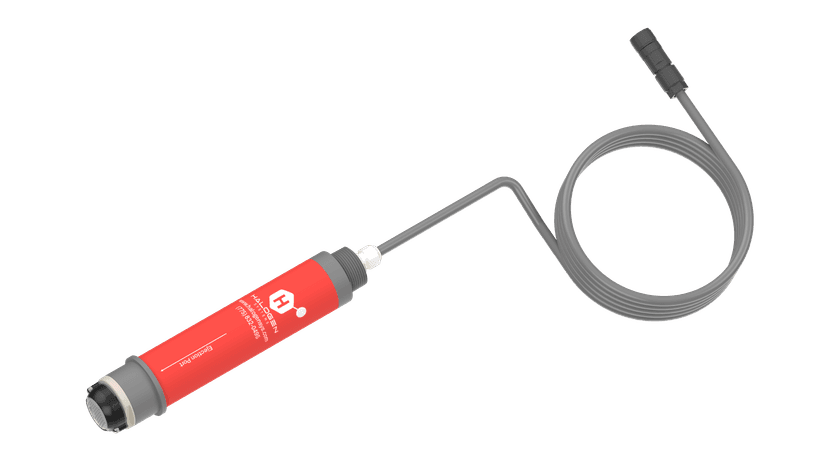
MP-HOT — hot water & cooling loop sensor
A single grab sample cannot show the full operating cycle. Continuous residual trends help your team identify changes, compare them with treatment activity and decide when to investigate. These measurements do not directly measure bacteria, scale or corrosion.
Residual can change between operator rounds. Trend the selected disinfectant and investigate excursions within your water management program; the sensor does not detect Legionella.
Track residual changes through dosing cycles, makeup-water changes and blowdown. Pair online readings with reference checks at a representative point.
Use residual trends to investigate over- and under-dosing with your treatment supplier. Establish site-specific control limits and validate any automated dosing response.
Start with the active biocide, expected residual range and water conditions. Choose a representative monitoring point with safe service access, then specify the sensor, controller and controls interface together. Direct installation can reduce sample plumbing and water loss where the application and mounting arrangement are suitable.
Review model-specific certification and installation requirements. Qualified direct installation can avoid a dedicated sample-to-drain stream.
Mechanical cleaning helps manage deposits on the sensing surfaces. Confirm performance in your water and retain routine inspection and reference checks.
MP-5F measures free chlorine, pH, ORP, conductivity and temperature. Select the residual species and model for the actual treatment chemistry.
Continuous logs can support an ASHRAE 188 / CDC water management program's documented control limits.
Start with the sensor’s Modbus RTU interface. Confirm controller, gateway and cellular requirements for the exact BMS or SCADA connection.
A qualified direct-installation configuration avoids a dedicated sample-to-drain stream. Savings depend on the measured sample and bypass flow being replaced.
Track incoming residual before it mixes with the tower water. Compare supply changes with changes observed in the recirculating loop.
Choose a representative point after treatment has mixed. Capture dosing cycles and operating changes, with nearby access for paired reference samples.
Define whether the reading supports an operating decision or a discharge requirement. Confirm the required method separately, then test signal scaling, alarms and loss-of-signal response.
Bring your loop drawing, exact biocide formulation, residual range, maximum temperature, pressure and conductivity. Identify the controls interface and the operator who will respond to an alarm.
Office towers, mixed-use buildings, and campuses subject to ASHRAE 188 water management plans.
Hospital condenser-water systems where facility teams need residual trends, reference checks and a documented response to changing conditions.
Data centers, food & beverage, pharmaceutical, and manufacturing cooling loops where uptime and product safety depend on chemistry control.
Use residual trends, reference checks and corrective-action records within your facility’s water management program. Monitoring does not detect Legionella or establish compliance by itself. Your responsible team defines the program, control limits and response procedures.
Free chlorine, bromine, chlorine dioxide and nonoxidizing biocides are different measurement applications. Provide the exact formulation and additives for review. ORP is not a substitute for a biocide concentration measurement.
No. Evaluate incoming makeup water and pretreatment monitoring separately from boiler feedwater, boiler water, steam and condensate. A hot-water rating does not establish suitability for those duties.
Evaluate the exact model and water chemistry. Published operating temperatures are 1–45°C for MP-5F and 1–60°C for MP-HOT. Also confirm pressure, conductivity, chlorine-measurement pH range, materials and service access; temperature alone does not establish suitability.
Select the model and configuration for the required species. MP-5F is a free-chlorine sensor; chloraminated water needs a dedicated measurement review. Share the exact formulation, including stabilized or blended biocides, before selecting equipment.
No. Continuous residual records can support a water management program, but an analyzer alone does not establish compliance. Have the responsible facility team define the applicable requirements, control limits and verification procedures.
Incoming makeup water is a useful monitoring point for changes in supplied residual. Evaluate it separately from recirculating water, where concentration, additives and fouling conditions may differ.
Share your tower configuration, biocide chemistry, and number of monitoring points — we'll recommend the right sensor & controller combination and pricing.
Free resource
PDF checklist + log sheet. Hand it to your customers.
Get the free checklistReview the treatment chemistry, representative measurement points and facility controls.
Explore the data-center guide →Explore incoming-water and pretreatment monitoring, with separate selection criteria for low-level chlorine removal.
Read the steam and boiler makeup-water guide →