Source-water assessment
Understand incoming water and possible disinfectant exposure.

Start with the water. Validate every critical limit.
Explore source-water and treatment-process monitoring with a Halogen application specialist. Hatchery monitoring calls for careful review of disinfectant chemistry, salinity, and the concentrations that matter to your operation.
Discuss your application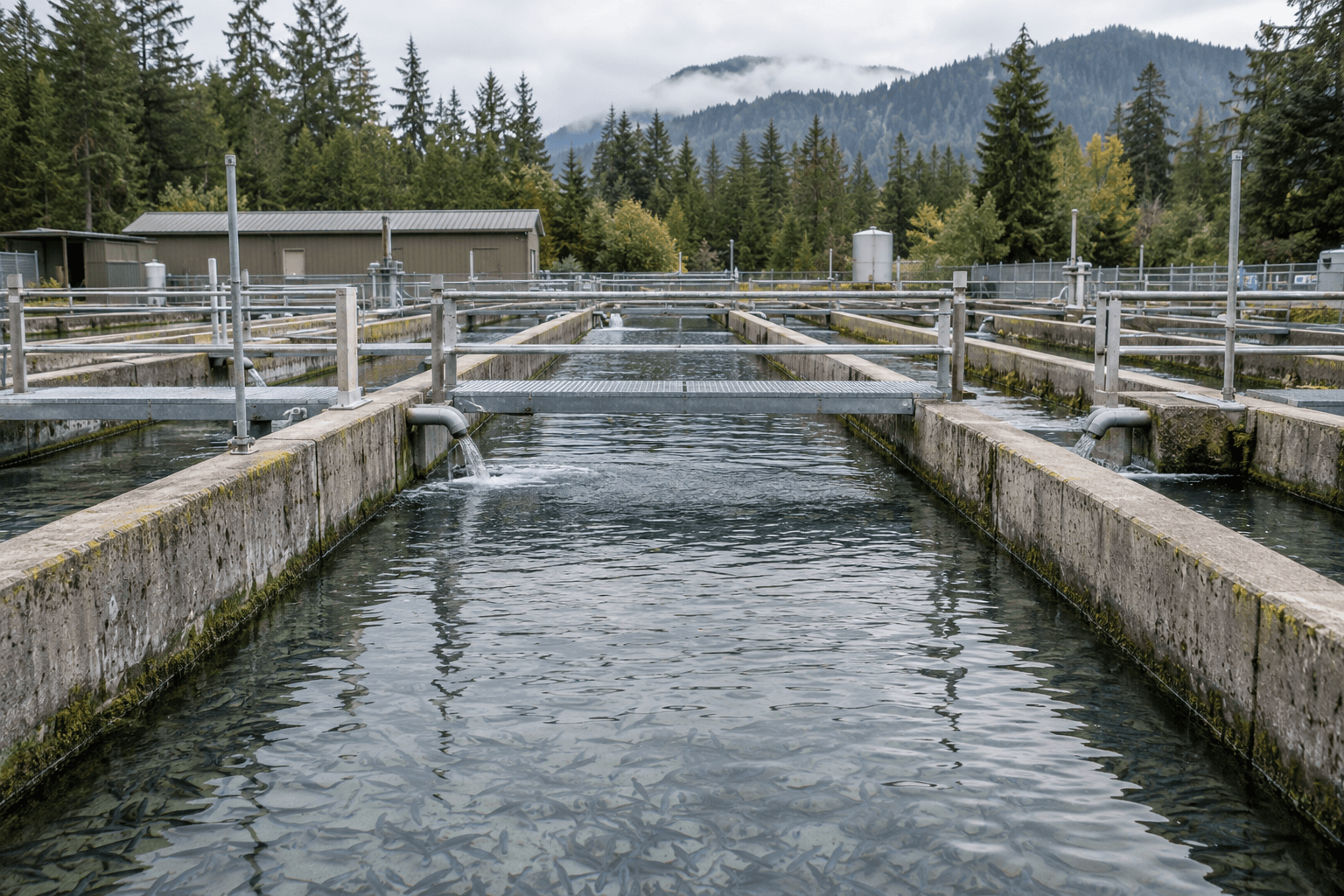 REPRESENTATIVE IMAGE
Understand incoming water and possible disinfectant exposure.
Evaluate suitable measurement points before water reaches rearing systems.
Compare the proposed sensor against the required reference method and range.
Identify disinfectant and incoming conditions.
Verify the required low-level detection and response time.
Agree on reference checks and alarm response before a pilot.
Conceptual monitoring sequence. Final placement, detection limits and control actions must be reviewed for your water and equipment.
Treat hatchery chlorine monitoring as a feasibility review. Establish the operating requirement with the responsible specialist, then assess detection limit, response time and water chemistry. Suitability for drinking-water residuals does not establish suitability for fish-protection thresholds.
Planning sequence; this is not a piping or control drawing.
Provide the action level, reference method and confidence needed.
Record salinity, temperature and possible interfering oxidants.
Account for transport delay, sensor response and stale or missing data.
Record the tested model, configuration, reference method, dates and conditions. A utility case study does not validate a different water matrix.
Bring these questions to your application review.
Application review required. Published chlorine detection limits may exceed the concentrations relevant to aquatic life. Do not use this page as a fish-safety assurance or a recommendation for life-support control.
Tell us what you need to measure. We’ll help you find the right starting point.