Disinfection monitoring
Track residual alongside your established reference measurements.

Keep a closer eye on your final treatment step.
Explore residual monitoring at disinfection contact basins and reclaimed-water systems, with the installation and maintenance plan matched to your water matrix.
Discuss your application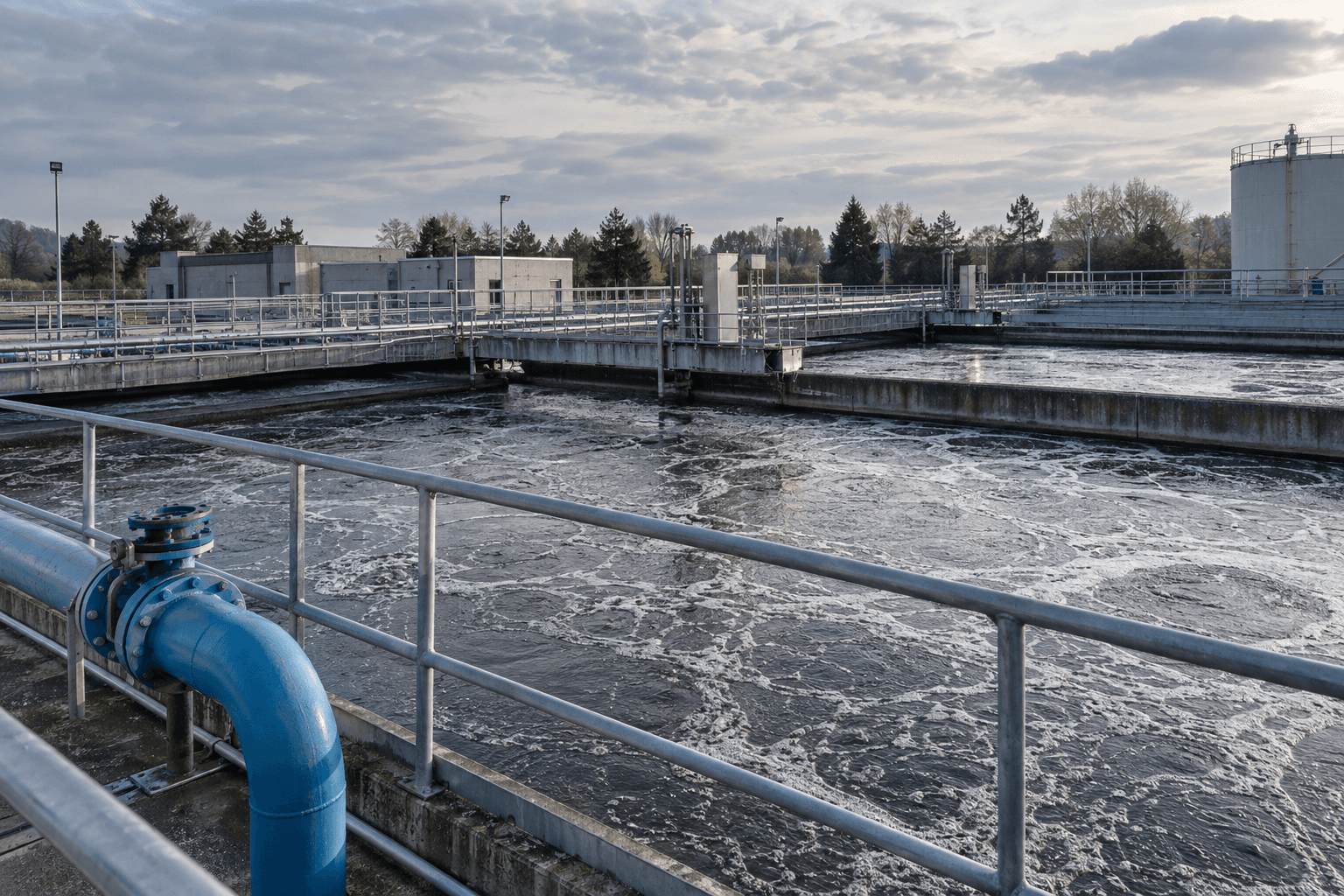 REPRESENTATIVE IMAGE
Track residual alongside your established reference measurements.
Understand water quality as treated water moves to its next use.
Bring readings into a controller or plant monitoring workflow.
Select the required residual species.
Account for treatment changes and representative placement.
Verify against the site requirement and reference method.
Conceptual monitoring sequence. Final placement, detection limits and control actions must be reviewed for your water and equipment.
Specify the measurement for the disinfection or reuse point first. Low-residual measurement after dechlorination is a separate selection problem: compare the required threshold with detection capability in the actual effluent, rather than relying on a displayed decimal place.
Planning sequence; this is not a piping or control drawing.
Document solids, fouling, oxidant interferences and residual species.
Compare detection limit and uncertainty with the action threshold.
Separate process trending from any specified reference or permit method.
Record the tested model, configuration, reference method, dates and conditions. A utility case study does not validate a different water matrix.
Bring these questions to your application review.
Low-level dechlorination and discharge verification require a separate detection-limit and method review. A process sensor does not automatically satisfy a permit method.
Plan continuous chlorine monitoring at wastewater disinfection and reuse points, with a practical checklist for residual species, fouling and verification.
A specification checklist for low-residual measurement after dechlorination: required limit, matrix verification, sampling delay and control-system behavior.
Tell us what you need to measure. We’ll help you find the right starting point.