
Self-cleaning
chlorine measurement.
Consistent flow. Continuously polished electrodes. Halogen brings greater control to the conditions at the sensing surface—so there is less for you to manage around the measurement.
It creates the flow.
And keeps itself clean.
The built-in impeller moves water across the electrodes while circulating SensiCLENE cleaning media over the sensing surfaces. Together, these actions reduce dependence on external flow and help keep the electrode surface clean and consistent.
See SensiCLENE in detail ↗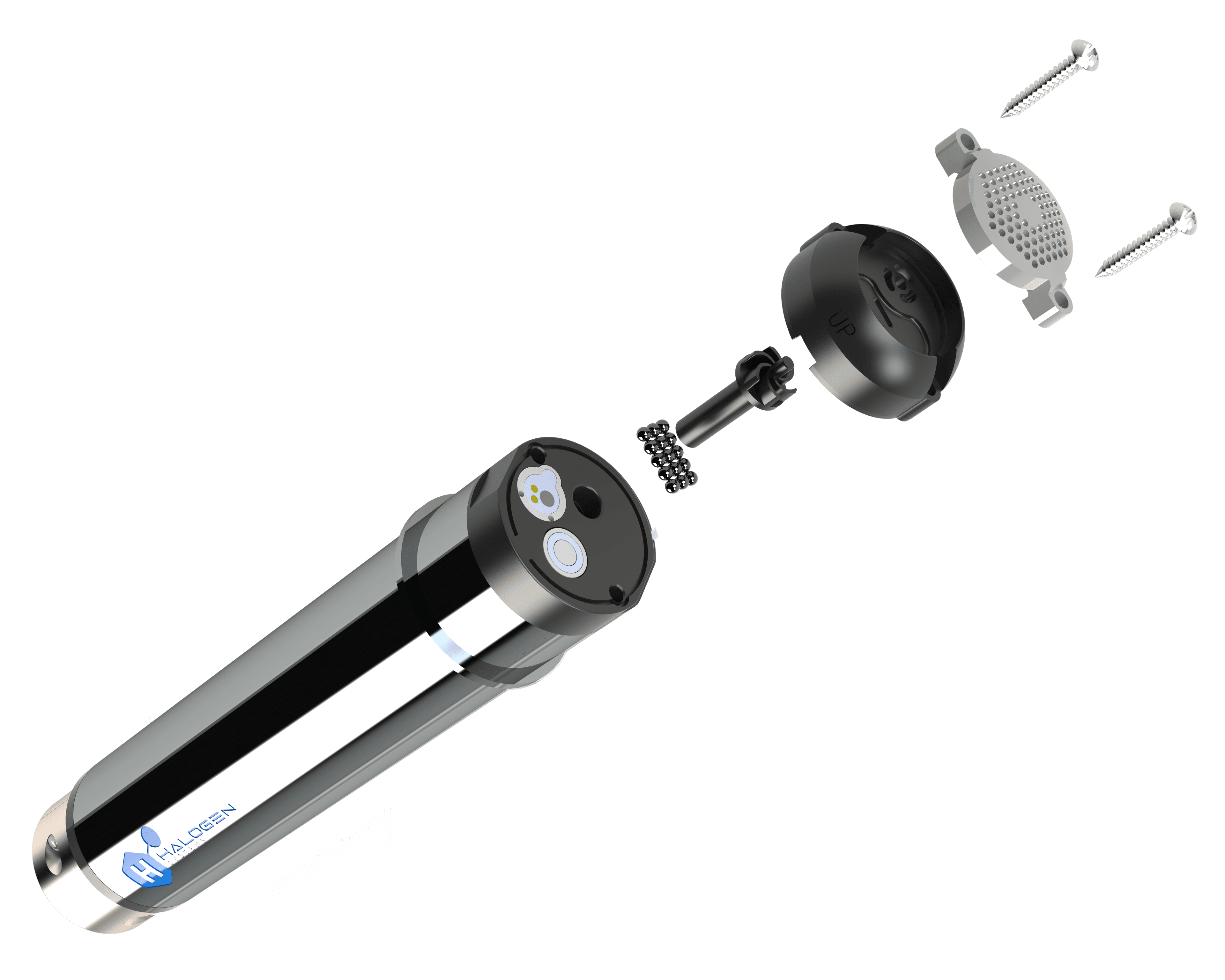
A cleaner surface.
A more consistent starting point.
Chlorine measurement depends on what happens at the electrode. Changes in local flow and surface buildup introduce variables. Halogen addresses both at the source: the impeller provides local water movement, and the cleaning media continuously clean and polish the electrodes.
That means less dependence on a steady pipe or flow-cell velocity and less buildup at the measurement surface. It is an approach to sensing built around managing the conditions that affect the reading.
Local circulation does not replace fresh, representative water at the monitoring point. In a stagnant pipe, the sensor measures the water around it. Follow the selected model’s operating limits, reference checks and maintenance schedule.
Find the right sensor for your application ↗A connected view of your water.
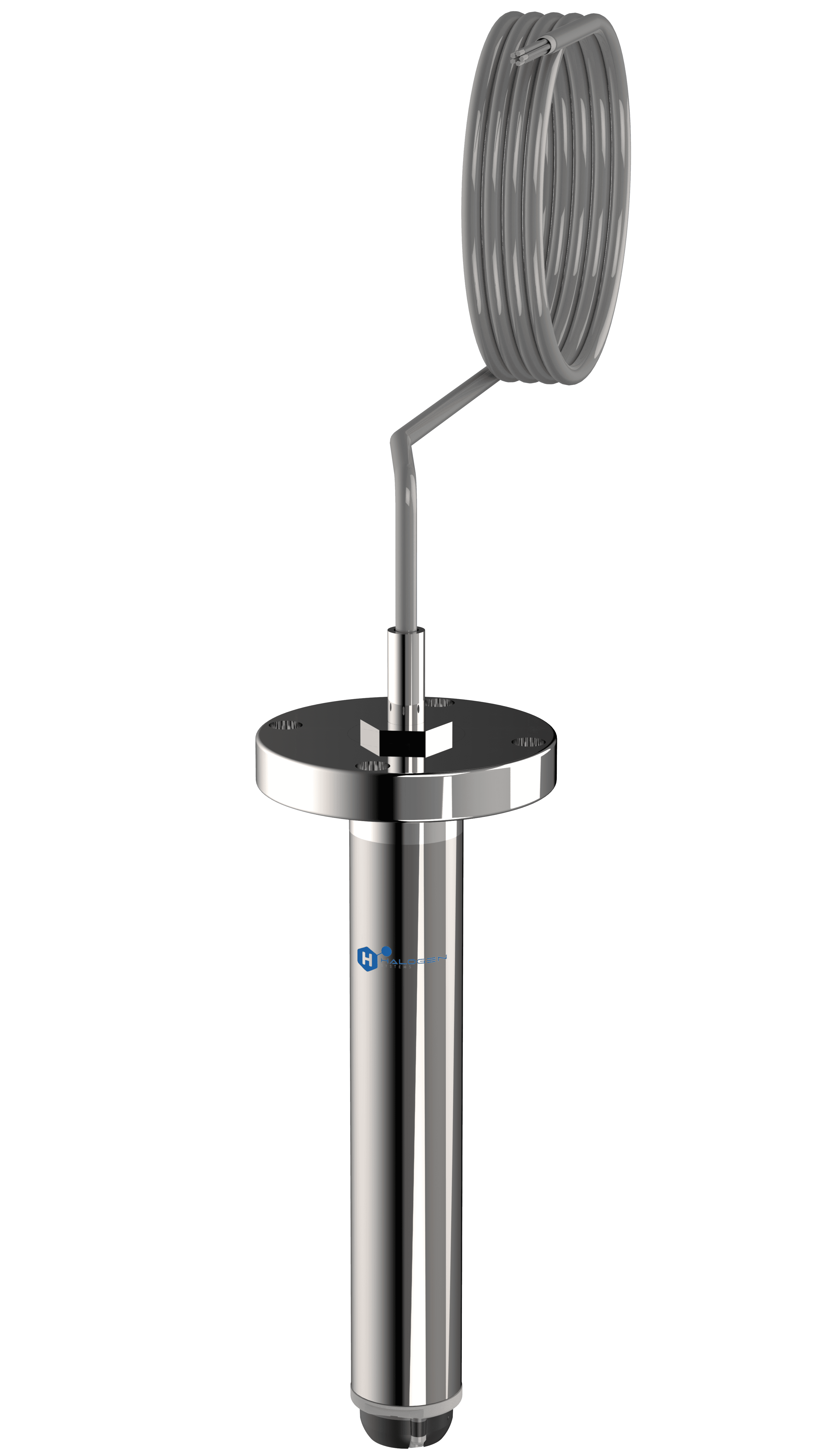
Sensor
Select the sensing approach for your disinfectant and water conditions.
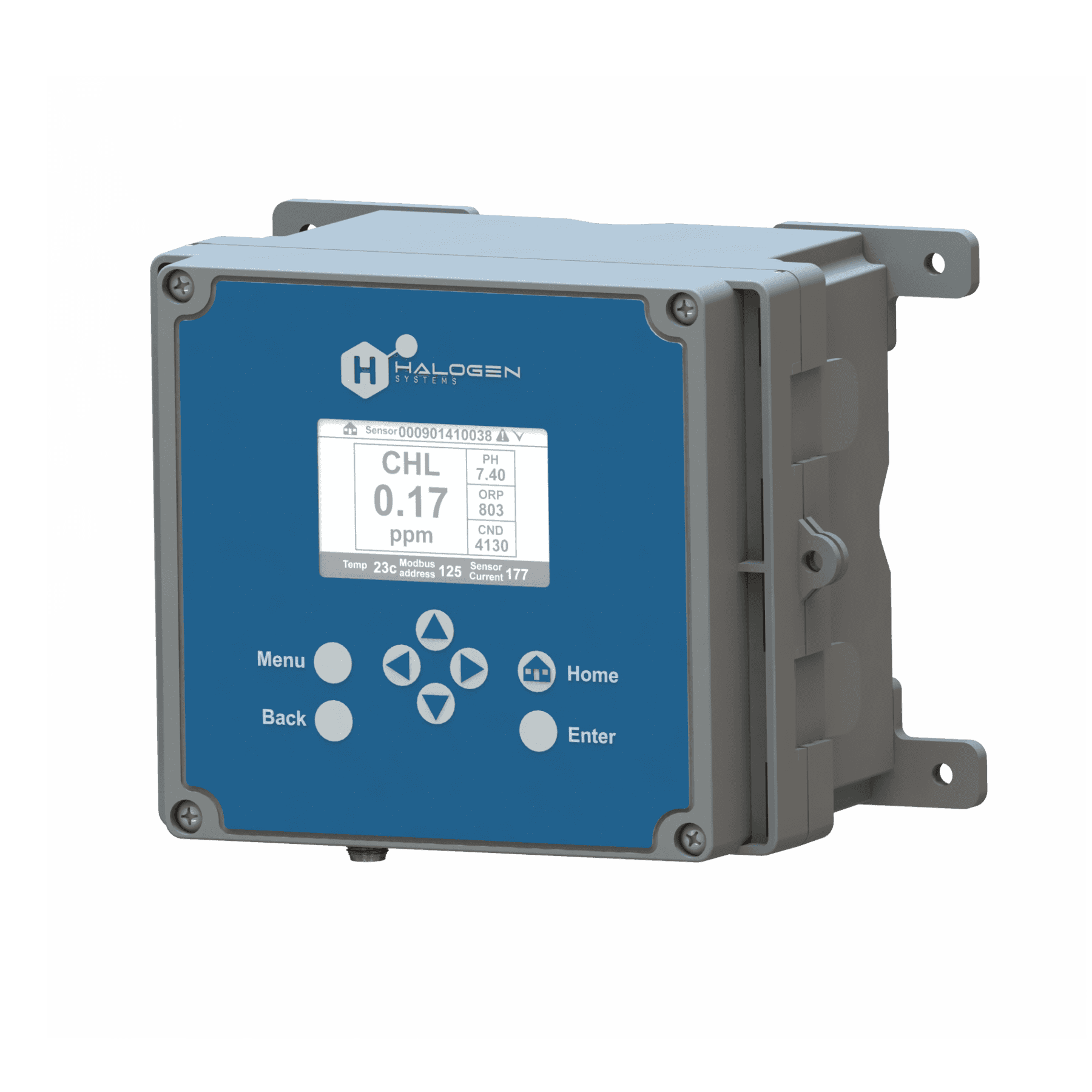
Controller & interface
Match power, communications, and control-system requirements.
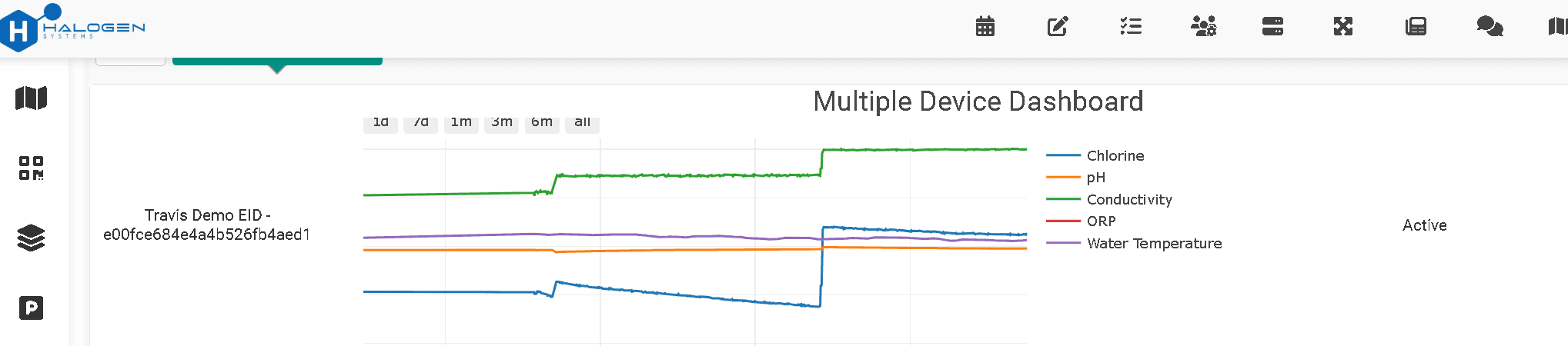
Optional remote monitoring
Explore data access and alerts with a supported connectivity configuration.
Explore the measurement principles.
This visual overview introduces electrode cleaning and local flow. For the detailed measurement-method explanation and selection limits, read the amperometric technology guide. Compare methods in the DPD and amperometric selection guide.
A better measurement
starts with your site.
Tell us what you need to measure. We’ll help you find the right starting point.