Incoming supply
Understand disinfectant residual before treatment.

Understand the water behind every batch.
Evaluate chlorine and chloramine monitoring from the incoming supply through carbon treatment and the brewing-water handoff. Match the measurement to your quality team's requirements and the actual residual species.
Discuss your application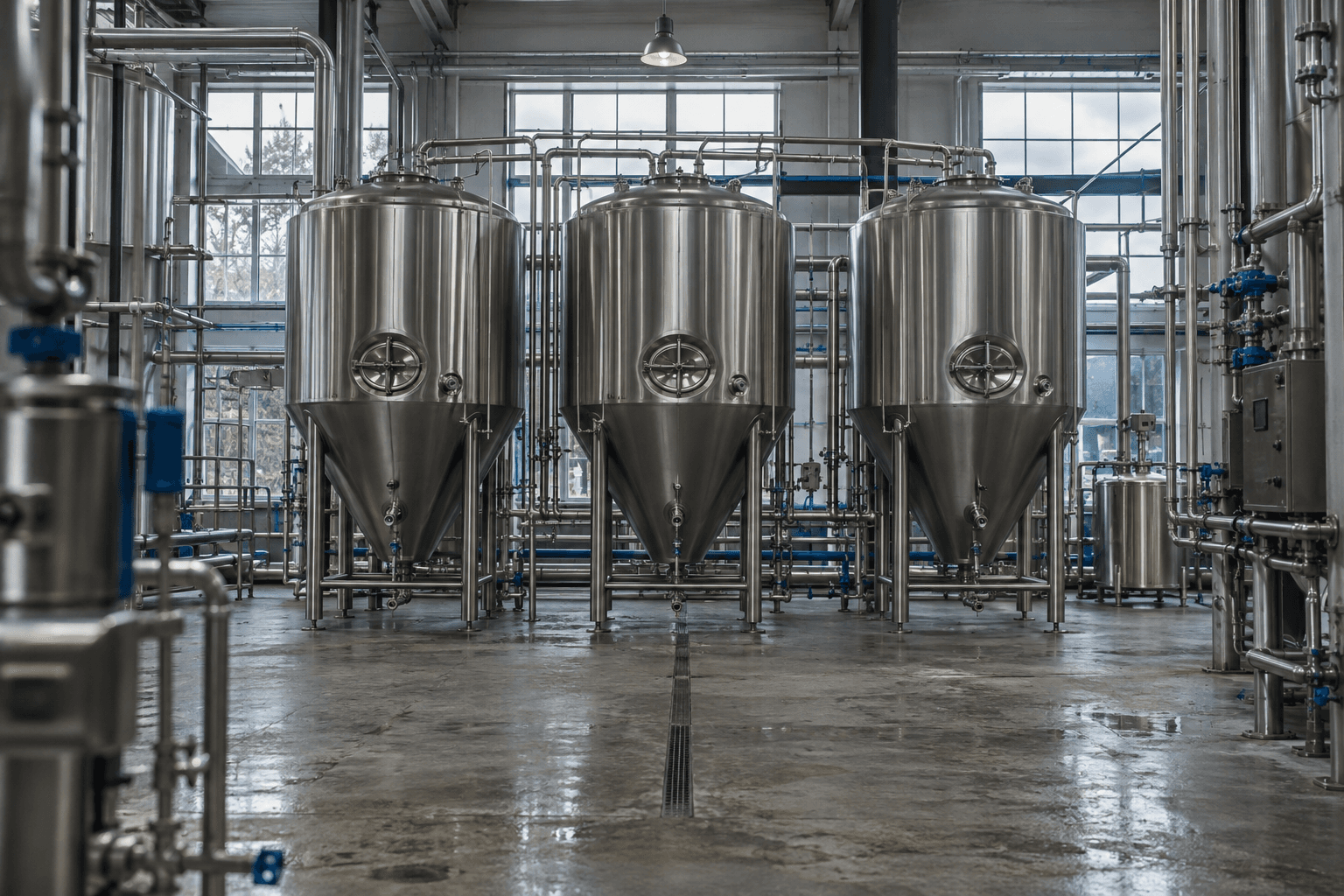 REPRESENTATIVE IMAGE
Understand disinfectant residual before treatment.
Evaluate breakthrough monitoring against the required low-level threshold.
Connect verified readings to the next process decision.
Identify free chlorine or chloramine.
Evaluate breakthrough against the required detection limit.
Verify the water against quality and equipment requirements.
Conceptual monitoring sequence. Final placement, detection limits and control actions must be reviewed for your water and equipment.
Identify free chlorine versus chloramine in the incoming supply, then define the residual threshold at each treatment step. Evaluate incoming-water monitoring separately from low-level breakthrough detection after carbon filtration. A sensor must resolve the action threshold in the actual water matrix.
Planning sequence; this is not a piping or control drawing.
Record supplier disinfectant, typical residual, pH and temperature.
Compare the breakthrough threshold with detection limit, response time and reference-method capability.
Review MP-5F for compatible free-chlorine feed water or MP-TOTAL for chloraminated supplies. Post-carbon suitability requires a separate low-level review.
Record the tested model, configuration, reference method, dates and conditions. A utility case study does not validate a different water matrix.
Bring these questions to your application review.
Low-level performance needs application-specific verification. Monitoring does not guarantee flavor quality or protection of an RO membrane.
Tell us what you need to measure. We’ll help you find the right starting point.