A supply change should not be a surprise
Incoming chlorine can change between grab samples. Monitor at the plant inlet so operators can check treatment performance when the supply moves outside the site’s accepted range.

Keep the right residual in the right place.
Your utility water and product water have different jobs. Track incoming chlorine, evaluate removal before sensitive processes, and see changes between manual checks—so your team knows when to investigate before water reaches production.
Find the right monitoring point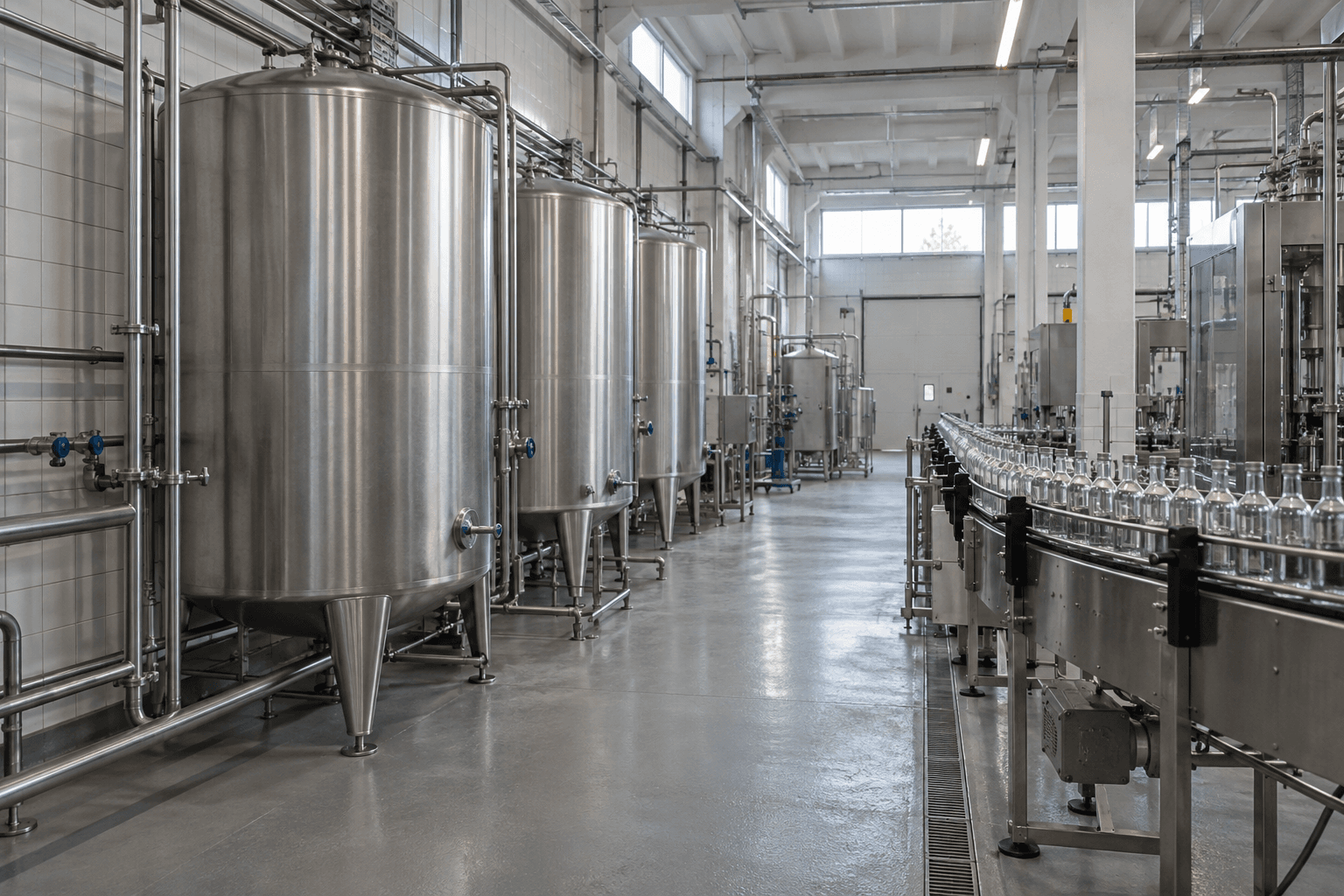 REPRESENTATIVE IMAGE
Incoming chlorine can change between grab samples. Monitor at the plant inlet so operators can check treatment performance when the supply moves outside the site’s accepted range.
Where chlorine must be removed for product-water specifications or membrane protection, evaluate monitoring after carbon or dechlorination. Confirm low-level measurement capability against your actual action limit before selecting a sensor.
Trend residual at storage outlets and critical utility-water branches. Give the next shift a record of changing conditions and a defined response, rather than relying only on isolated spot readings.
What disinfectant enters the plant?
Does the treated residual meet the required threshold?
What reaches the next process?
Conceptual monitoring sequence. Final placement, detection limits and control actions must be reviewed for your water and equipment.
What changed before our treatment?
Identify free chlorine versus chloramine. Compare the trend with incoming-water limits and verify an unexpected reading with the plant’s reference method.
Is chlorine getting through?
Evaluate residual before an RO skid or a chlorine-sensitive product-water handoff. Review treatment if the reading rises; agree on detection limit, response time and verification at the required low concentration.
Is the residual reaching the user?
Select representative tank outlets and distant branches where the result changes an operating decision. Investigate loss of residual, water age or treatment changes under the plant’s procedure.
Set limits with your quality team. Define who checks an unexpected reading, what reference test they use, and when your procedure calls for treatment adjustment, water diversion or a production hold. Review controller, PLC or historian integration as part of the installation.
Halogen’s reagent-free, membrane-free sensors and mechanical self-cleaning can reduce consumable handling and electrode-cleaning work. Keep a documented verification and maintenance schedule; continuous readings complement your required sampling.
See how self-cleaning works ↗Planning references: DuPont membrane pretreatment guidance · FDA produce wash-water monitoring guidance. Apply the requirements for your process and equipment.
Bring these questions to your application review.
For ingredient water, food-contact wash water and CIP, confirm materials, hygienic installation, sanitizer chemistry, concentration and cleaning temperature with your quality and engineering teams. A chlorine reading does not establish microbiological safety or release a batch. Pressure, temperature and detection limits must fit the specific duty; do not assume suitability for peracetic acid, ozone or every sanitizer.
Start here for free-chlorine monitoring in compatible incoming and utility water. Confirm range and installation for your process.
Evaluate for chloraminated supplies or a total-chlorine measurement objective. Confirm the required species and configuration.
Confirm sensor, installation, and controls together.
Identify chlorine monitoring points for incoming water, storage and utility distribution at food and beverage plants. Separate utility and food-contact requirements.
Plan an application review for produce wash-water monitoring, covering sanitizer chemistry, changing loading, pH, installation and cleaning exposure.
Separate final-rinse monitoring from CIP cleaning chemistry. Review temperatures, chemical exposure, hygienic installation and verification before a pilot.
A suitable residual measurement after treatment can help identify a rise that needs investigation. For near-zero targets, confirm detection limit, accuracy, response time and a suitable reference method at your action limit. Do not treat a displayed zero as proof of absence or assume any chlorine sensor is suitable for trace-level release decisions.
Match the measurement to the supply and the operating decision. Free chlorine and chloramine require different selection considerations; total chlorine is not interchangeable with free chlorine. ORP describes oxidation-reduction conditions and is not a direct chlorine concentration measurement.
Review those duties separately. Produce wash water can have changing organic load and pH; CIP can expose equipment to concentrated chemicals and high temperatures. Confirm the sanitizer, range, materials, hygienic mounting and cleaning exposure before a pilot. A chlorine sensor does not automatically measure peracetic acid or ozone.
No. Use continuous trends to support the plant’s monitoring and response procedures. Keep required reference checks, microbiological testing and quality approvals. Your quality team sets process limits and batch-release rules.
Send a simple water-system sketch, the monitoring point, disinfectant species, expected range and action limits, pressure and temperature, cleaning conditions, mounting requirements and the desired controls connection. State whether the water is utility, ingredient or product-contact water.
Tell us what you need to measure. We’ll help you find the right starting point.