Built for
NJ SB2188 Compliance
New Jersey SB2188 requires public water systems to maintain a minimum of 0.3 mg/L free chlorine \u2014 or 1.0 mg/L monochloramine \u2014 at all times. The Halogen MP5 and MP-TOTAL sensors give utility operators continuous, in-pipe verification with no waste stream, no shutdown for installation, and six-month battery + cellular IoT operation for remote sites.
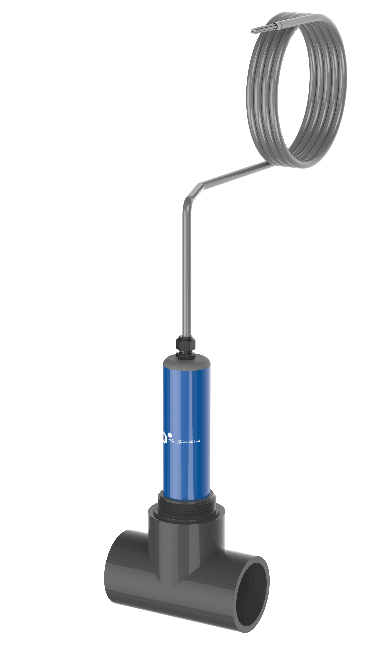
MP5 Tee-Mount Sensor
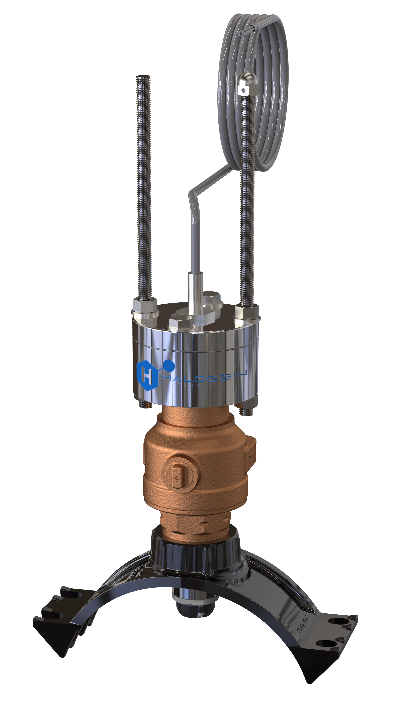
Wet-Tap Sensor
What NJ SB2188 Requires
The law sets a minimum disinfectant residual that must be maintained throughout the distribution system, and operators must demonstrate continuous compliance \u2014 not just produce a weekly sample.
| Parameter | Minimum level | Notes |
|---|---|---|
| Free chlorine | ≥ 0.3 mg/L | Minimum residual at all points in public water systems |
| Monochloramine | ≥ 1.0 mg/L | Alternative disinfectant threshold for chloramine utilities |
| Monitoring | Continuous | All points in the distribution system, demonstrated 24/7 |
Why Traditional Sensors Fall Short
Reagent analyzers were never designed for distribution-wide compliance
Conventional chlorine analyzers were built to monitor treatment plant effluent, not to be deployed at hundreds of points across a distribution network. That mismatch creates three structural problems for any utility trying to comply with SB2188.
70,000-gallon waste stream
Traditional reagent-based analyzers discharge roughly 70,000 gallons of chemical-laden waste per sensor per year — a hard cost and a sustainability liability.
Cannot tap into live pipe
Conventional sensors require shutdown and a fabricated sample loop. That makes retrofits expensive and ties operators to a handful of practical monitoring points.
Weekly grab samples miss the gaps
A weekly DPD reading captures less than 0.1% of operating hours. Transient residual drops slip past until a regulator pulls a sample and finds them.
The Halogen Solution
Continuous compliance, no waste, no shutdown, no power required.
NSF-61 certified
Materials approved for direct contact with drinking water — meets the certification SB2188 requires for any in-line device.
Flow- and pressure-independent
Accurate readings whether the pipe is at 145 PSI or in an idle storage tank. No bypass loops, no rotameter calibration.
Wet-tap installation
Installs into live, pressurized pipe through a standard corp stop. No shutdown. Drop-in retrofit for existing distribution networks.
Zero waste stream
No reagent, no sample bleed-off. Saves ~70,000 gallons per sensor per year and removes a recurring chemical-handling cost.
Six-month battery operation
IP68-rated battery enclosure for sites with no utility power — well heads, remote pump stations, perimeter monitoring points.
Cellular IoT data feed
Built-in modem streams to SCADA, the SENSUS AMI Network (proven in Gainesville, GA), or the Halogen cloud. No additional gateway hardware.
Six months unattended
No reagent refill, no membrane changes. SensiCLENE keeps the electrode clean automatically; operators visit only for calibration.
Five parameters, one probe
Free chlorine, pH, conductivity, ORP, and temperature in a single in-pipe sensor. MP-TOTAL variant replaces ORP with total chlorine + monochloramine.
Choosing the Right Sensor
MP5 for free chlorine systems. MP-TOTAL for monochloramine.
Halogen MP5
For systems disinfecting with free chlorine and required to maintain \u2265 0.3 mg/L residual. Measures free chlorine, pH, conductivity, ORP, and temperature in a single in-pipe probe.
- check_circle Five parameters, one probe
- check_circle Up to 145 PSI wet-tap installation
- check_circle NSF-61 + BABA compliant
Halogen MP-TOTAL
For systems disinfecting with chloramines and required to maintain \u2265 1.0 mg/L monochloramine. Measures free chlorine, monochloramine, and total chlorine simultaneously \u2014 no reagents, no DPD waste.
- check_circle Direct monochloramine measurement
- check_circle Reagent-free, no waste stream
- check_circle Same wet-tap install as MP5
Remote Connectivity
Monitor compliance from anywhere
Equipped with an optional cellular modem, the sensor transmits real-time water quality data from any location \u2014 campgrounds, rest stops, storage tanks, or remote distribution points. Data is accessible through the Halogen cloud, the SENSUS AMI Network (proven in Gainesville, GA), or integrates directly into your existing SCADA system.
Replace manual grab samples with continuous 24/7 documentation for regulatory reporting. Battery-powered operation extends compliance coverage to sites where running power and ethernet was previously cost-prohibitive.
Learn about remote monitoring arrow_forward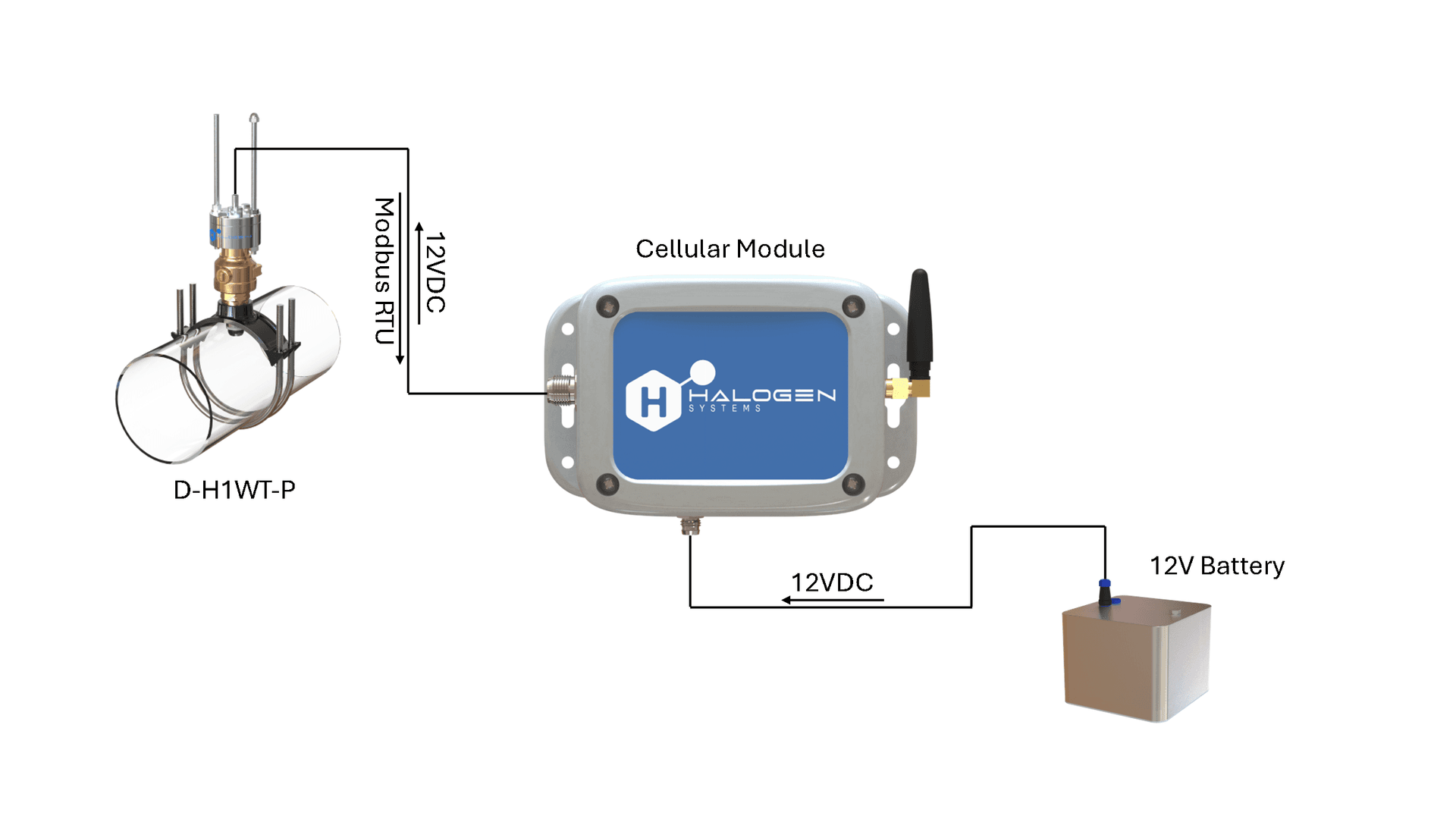
NJ SB2188 Site Assessment
Talk to an application engineer
Share a quick description of your system \u2014 disinfectant type, number of monitoring points, distribution geometry \u2014 and we'll recommend sensor placement and pricing for SB2188 compliance.
Frequently asked questions
What does New Jersey SB2188 require?
NJ SB2188 mandates that public water systems maintain a minimum disinfectant residual of 0.3 mg/L free chlorine or 1.0 mg/L monochloramine throughout the distribution system. Operators must verify these levels continuously, not just through periodic grab samples.
Does continuous chlorine monitoring satisfy NJ SB2188?
Yes. Continuous in-pipe monitoring is the only practical way to demonstrate compliance across all operating hours. A weekly grab sample covers less than 0.1% of the year, and disinfectant residual can drop and recover between samples without being recorded.
Which Halogen sensor should we use — MP5 or MP-TOTAL?
MP5 is for free-chlorine systems and measures free chlorine, pH, conductivity, ORP, and temperature. MP-TOTAL is for monochloramine systems and measures free chlorine, monochloramine, total chlorine, pH, conductivity, and temperature in a single in-pipe probe. Both are NSF-61 certified and install identically.
Can the sensor be installed without shutting down the pipe?
Yes. The wet-tap installation lets the sensor go into a live, pressurized distribution line through a standard corp stop valve. No shutdown, no bypass loop, no disruption to service. The same probe also works in storage tanks and reservoirs where there is no pipe flow.
How does the sensor work in remote sites with no power or wired data?
The MP-series sensor can operate on battery for up to six months between service visits and has a built-in cellular IoT modem. Data can stream to SCADA, to the SENSUS AMI Network, or to the Halogen cloud — no additional gateway hardware required.
How much waste does this eliminate compared to a traditional analyzer?
A conventional reagent-based chlorine analyzer typically produces around 70,000 gallons of chemical-laden waste stream per sensor per year. The Halogen sensor uses no reagents and produces no waste stream, removing that water loss and the associated chemical handling cost.
More on Legionella & chloramine monitoring
Building-water (ASHRAE 188) compliance lives one level up. Our monochloramine white paper explains the underlying chemistry.