
Know the water entering your cooling system.
Every downstream water-quality investigation needs an incoming baseline. Measure free chlorine, pH, temperature, conductivity and ORP at selected supply and makeup points to recognize source changes, follow water through storage and understand what each tower receives.
Plan My Water-Quality Monitoring ↗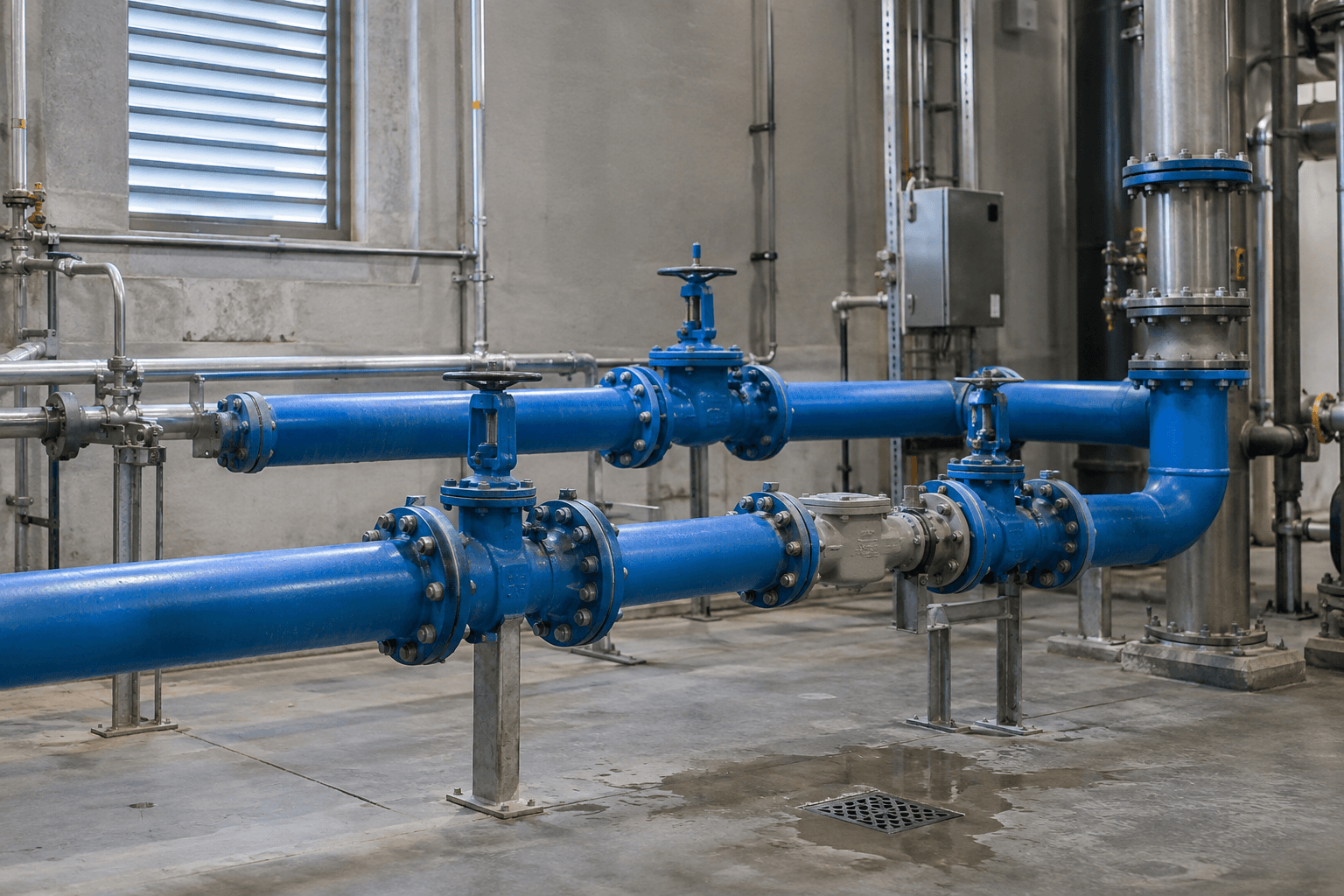
- Makeup waterEstablish incoming chemistry
- Storage / treatmentReview turnover and water quality
- Tower & recirculationSelect compatible monitoring points
- Controller & BMSSend measurements and status
Conceptual monitoring sequence. The controller receives data. Blowdown remains a separate process-water stream; potable water and server coolant require separate evaluation.
Connect water measurements to the systems your team uses.
Give each incoming-water, storage and cooling-loop point a clear identity. Trend free chlorine, pH, temperature, conductivity and ORP alongside dosing and equipment events so operators can compare locations and identify what changed. Include data freshness and available sensor status in the view.
Use the BMS/DCIM communications guide to compare the three layers, review D20 interface options and plan point mapping, alarms and communications-loss behavior.
Separate a supply change from a local loop issue
When several towers change together, start with incoming water. A shift in conductivity or pH may accompany a source or blend change; a residual change may begin at the supply or develop during storage. Paired upstream and downstream trends help narrow the investigation.
For each source, establish a normal operating baseline across the five measurements. Record source switches, tank refill and blending events so operators can connect the time of a change with the affected water path.
Candidate measurement points
| Point | What to measure and why | Potential issue revealed | Fit and qualification |
|---|---|---|---|
| Incoming source before storage | Correct residual plus relevant context | Changed incoming baseline | MP5/MP-TOTAL by disinfectant; confirm source chemistry and representative water |
| Storage outlet | Residual and temperature, with inlet comparison | Change during residence in storage | Same chemistry-based routing; confirm tank mixing, level and appropriate sampling locations |
| Blended makeup after adequate mixing | Selected residual and conductivity context | Change associated with source blending | Conditional compatibility; characterize every source and additive |
| Final makeup line to a tower | Incoming residual and water-quality baseline | Change before contact with recirculating water | Confirm intermittent flow, service access and complete assembly ratings |
| Rainwater/reclaimed treatment outlet | Relevant residual plus separately specified quality checks | Variable incoming treatment condition | No default fit: solids, organics, interference and reuse requirements need review |
An instrument in a makeup line may encounter long no-flow periods. Mark those periods in the data where a reliable facility flow/status signal exists. The stored reading should not imply that new water is entering the system when the line is idle.
What the five measurements tell the receiving team
| Measurement | Incoming and makeup-water question |
|---|---|
| Free chlorine | What residual arrives, and how does it change before reaching the tower? |
| pH | Has the incoming chemistry changed in a way the treatment provider needs to review? |
| Temperature | Is stored or supplied water warming, and does that coincide with residual changes? |
| Conductivity | Has the dissolved-ion baseline changed, affecting interpretation of tower concentration? |
| ORP / redox | Has the oxidation/reduction condition changed with source, storage or treatment? |
MP5F measures all five parameters. Identify the source disinfectant: a chloraminated supply requires a total-chlorine or monochloramine measurement strategy if that is the required residual. Other source-quality tests remain part of supply acceptance.
Installation and Halogen technology
Halogen's bare-electrode amperometric approach avoids liquid reagents and membranes. Mechanical self-cleaning changes routine service tasks, while verification and inspection remain necessary. Use approved direct insertion, wet-tap, PVC-tee, immersion, side-stream or flow-cell hardware appropriate to the specific line or tank. See the MP5 datasheet.
Low flow still requires representative water
Internal circulation at the sensor does not renew water in a long dead leg. Evaluate the location during both active makeup and standby. Select a point that answers the intended question and permits a representative reference sample. Confirm orientation, wetted materials, installation access and safe isolation with engineering.
A direct installation can avoid continuous analyzer sample discharge. If sampling is routed away from the main line, document whether it drains or returns and whether the return is permissible for that water system. Do not assume returning sampled water to potable service is acceptable.
Make source changes visible in the BMS
Specify the approved D20 host connection and identify source selection, line status and timestamp information available from facility controls. A useful trend distinguishes a genuine source event from a sensor fault or stale data. Remote access through an approved configuration can help technicians prepare before visiting an unmanned makeup-water installation.
Start with monitoring and operator review unless an automatic response has been separately designed. A residual alarm is not permission to change the utility supply, operate a valve or initiate chemical feed without the proper control strategy.
Expand visibility with fewer recurring analyzer tasks
A monitoring plan may include an inlet, storage outlet and several makeup branches. Reagent-free, membrane-free MP5F sensing and mechanical electrode cleaning make service requirements an important part of the engineering comparison at each point.
Evaluate approved direct in-pipe mounting to keep monitoring water in the system. Include safe removal, reference-sample access and actual service water in the design. Use the analyzer water-savings calculator to quantify the avoided drain across the selected points.
Engineering specification
Provide source descriptions, utility disinfectant information, blending/seasonal changes, treatment additives, required analyte/range, temperature, pH, conductivity, pressure, line size/material, flow/standby conditions, proposed mounting, power, controls interface and reference procedure. Include applicable drinking-water contact documentation and a proposed commissioning comparison during representative operating states.
Evaluate reclaimed and blended supplies
Review the reclaimed-water monitoring guide before transferring an existing sensor configuration to a new source. Source quality, disinfectant and storage can change the measurement question. Meter potable and alternative supplies separately to substantiate displacement claims.
Prepare for a water-source change
- Confirm the new supply and treatment conditions with the responsible teams.
- Document baseline chemistry and the proposed blend.
- Review sensor compatibility and reference checks.
- Label the source-change event in the BMS trend.
- Define response ownership and criteria for resuming normal operation.
Use the water review checklist to capture assumptions, meter coverage and source-change responsibilities.
Questions & answers
Why monitor incoming and makeup water separately from tower water?
Incoming and makeup measurements establish the baseline that reaches each cooling circuit. Compare free chlorine, pH, temperature, conductivity and ORP upstream and downstream to distinguish supply or storage changes from tower concentration and treatment response.
Which chlorine sensor should be used with monochloramine?
MP-TOTAL is the Halogen product route for monochloramine and total-chlorine applications, subject to approval for the actual water and operating conditions. Confirm the desired analyte rather than requesting a generic chlorine value. Provide the source treatment, expected range, temperature and relevant additives so the proposed measurement can be checked appropriately.
Can makeup water be monitored while the line is idle?
A suitable configuration may measure the water in contact with the sensor during zero bulk flow. That result describes the local water, which may be aging while the line is idle. Interpret it alongside line status and placement; internal sensor circulation does not make an isolated branch representative of incoming supply.
Can the same instrument monitor reclaimed or rainwater makeup?
Possibly, but compatibility must be established rather than assumed. Identify the disinfectant, treatment steps, solids, organics and other substances that could affect measurement or service. Confirm required water-quality checks beyond chlorine. A residual reading alone does not establish that rainwater or reclaimed water is suitable for the proposed use.
What happens if the utility changes disinfectants?
Review the measurement strategy with the utility, treatment provider and instrument supplier before interpreting the new condition. A change between free chlorine and chloramines may change the analyte needed and the reference procedure. Record the source change and confirm that the selected configuration covers the intended measurement during the transition.
How does incoming conductivity help tower operation?
MP5F conductivity establishes the makeup-water baseline for comparison with recirculating water. A conductivity ratio can indicate concentration where appropriate for the chemistry. Source blending and treatment additions affect interpretation; the treatment designer sets the limits using water analysis and equipment requirements.
Plan your water-quality monitoring points.
Bring your water sources, cooling-loop layout and treatment program. We can help review five-parameter MP5F monitoring, low-maintenance installation options, sample-water savings and the data your operations team needs.
Follow the water through your facility.
Know your water. From incoming supply to every cooling loop.
Monitor free chlorine, pH, temperature, conductivity and ORP across data-center facility water. Explore low-maintenance sensing and analyzer water savings.
Understand the water in every cooling tower.
Use free chlorine, pH, temperature, conductivity and ORP trends to understand cooling-tower treatment, concentration and changing operating conditions.
Make water-quality changes visible to your water-management team.
Track residual, temperature and water-quality changes at data-center control points. Support a documented Legionella water-management response.
Keep the measurements. Reduce the water sent to drain.
Compare low-maintenance MP5F water-quality monitoring with existing sample drains. Quantify analyzer water savings across your data-center campus.
How much water could your monitoring points save?
Calculate annual sample-water savings from direct MP5F installation. Compare drain flow, operating hours and monitoring points, then download your estimate.
See what changes when your water source changes.
Monitor free chlorine, pH, temperature, conductivity and ORP when data-center water sources or blends change. Compare incoming and cooling-loop conditions.
Manage concentration with a clearer view of tower water.
Use MP5F conductivity, pH, temperature, free chlorine and ORP trends to support treatment-approved cooling-tower concentration and blowdown decisions.
Use five water-quality trends to find the next check.
Investigate changing residual with pH, temperature, conductivity and ORP. Compare supply and loop trends, verify samples and check BMS data.