
ENGINEERED FOR WATER. BUILT FOR THE FIELD.
My Halogen Track an order Cloud login
Halogen Systems
CHLORINE MONITORING / APPLICATION GUIDE

Wastewater effluent chlorine monitoring

Plan continuous chlorine monitoring at wastewater disinfection and reuse points, with a practical checklist for residual species, fouling and verification.

Review your monitoring point
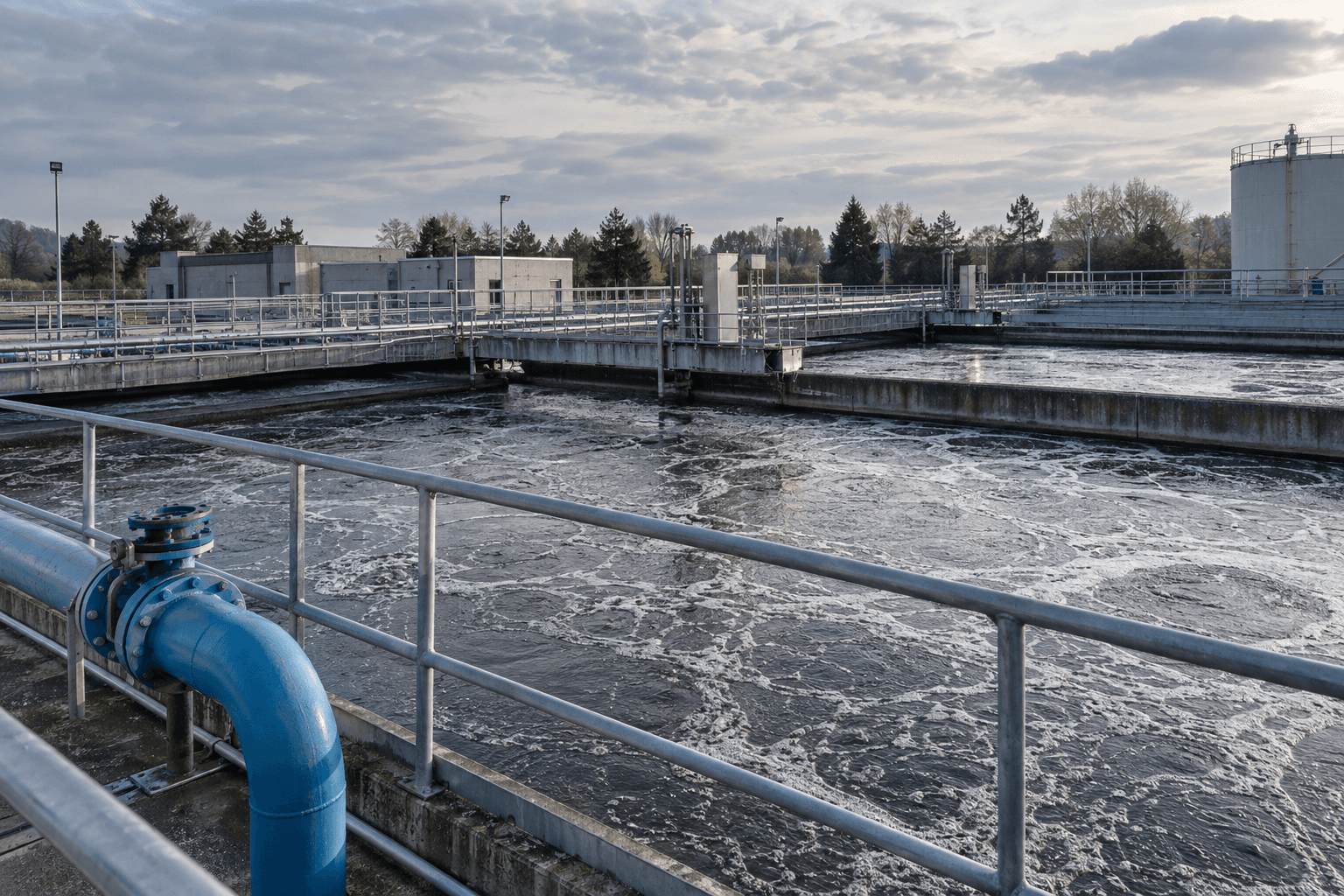
Representative wastewater treatment basins with metal walkways and process piping
Representative wastewater & reuse setting.
THE SHORT ANSWER

How do you choose a chlorine analyzer for wastewater effluent?

Start with the treatment stage and the residual you need to measure. Disinfection-process monitoring, reuse-water monitoring and final discharge verification can require different ranges and methods. Evaluate a candidate analyzer against a reference method in your actual effluent before specifying it.

Choose the point that answers your operating question.

  1. EVALUATION POINT 1Disinfection process

    Understand the incoming conditions.

  2. EVALUATION POINT 2Representative measurement

    Evaluate the treatment or process change.

  3. EVALUATION POINT 3Operator response

    Define verification and operator response.

Conceptual monitoring sequence. Final placement, detection limits and control actions must be reviewed for your water and equipment.

01 / APPLICATION PLANNING

Separate disinfection from dechlorination

A reading used to follow residual after disinfectant addition answers a different question from a reading used to verify a very low residual after dechlorination. Document the purpose of each point, the expected range and the action an operator will take. Do not carry a successful disinfection-stage trial over to a low-level discharge application without separate evidence.

02 / APPLICATION PLANNING

Evaluate cleaning in the real water matrix

Include suspended solids, deposits, changing loading and service access in the evaluation. Compare reference readings before and after scheduled service, and record the time spent cleaning and checking the instrument. Self-cleaning is a feature to evaluate in a pilot, not a reason to omit inspection or assume a fixed maintenance interval for every plant.

03 / APPLICATION PLANNING

Make the result useful to operators

Choose a representative point after the process has mixed, with access for reference sampling. Account for transport delay if a sample line is used. Agree on the controller interface, signal-quality indication and response to an unavailable reading before connecting the measurement to plant controls.

QUESTIONS FROM THE FIELD

Clear answers before you choose.

Can a reagent-free chlorine sensor measure wastewater?

It is a candidate for application review. Confirm the selected model’s measurement species, range and matrix compatibility, then compare it with reference measurements in the intended effluent.

Does continuous monitoring replace permit samples?

Do not assume it does. Determine the required reporting method and verification workflow with the plant’s responsible team before changing any sampling program.

What should a wastewater pilot measure?

Record measurement agreement, availability, fouling, service effort and recovery after process changes. Include the least favorable conditions expected in routine operation.

CONTINUE YOUR RESEARCH

Related monitoring decisions.

LET’S TALK ABOUT YOUR WATER

A better measurement
starts with your site.

Tell us what you need to measure. We’ll help you find the right starting point.

Get a sensor recommendation
Help me choose a sensor ↗