
ENGINEERED FOR WATER. BUILT FOR THE FIELD.
My Halogen Track an order Cloud login
Halogen Systems
CHLORINE MONITORING / APPLICATION GUIDE

Food and beverage utility-water chlorine monitoring

Identify chlorine monitoring points for incoming water, storage and utility distribution at food and beverage plants. Separate utility and food-contact requirements.

Review your monitoring point
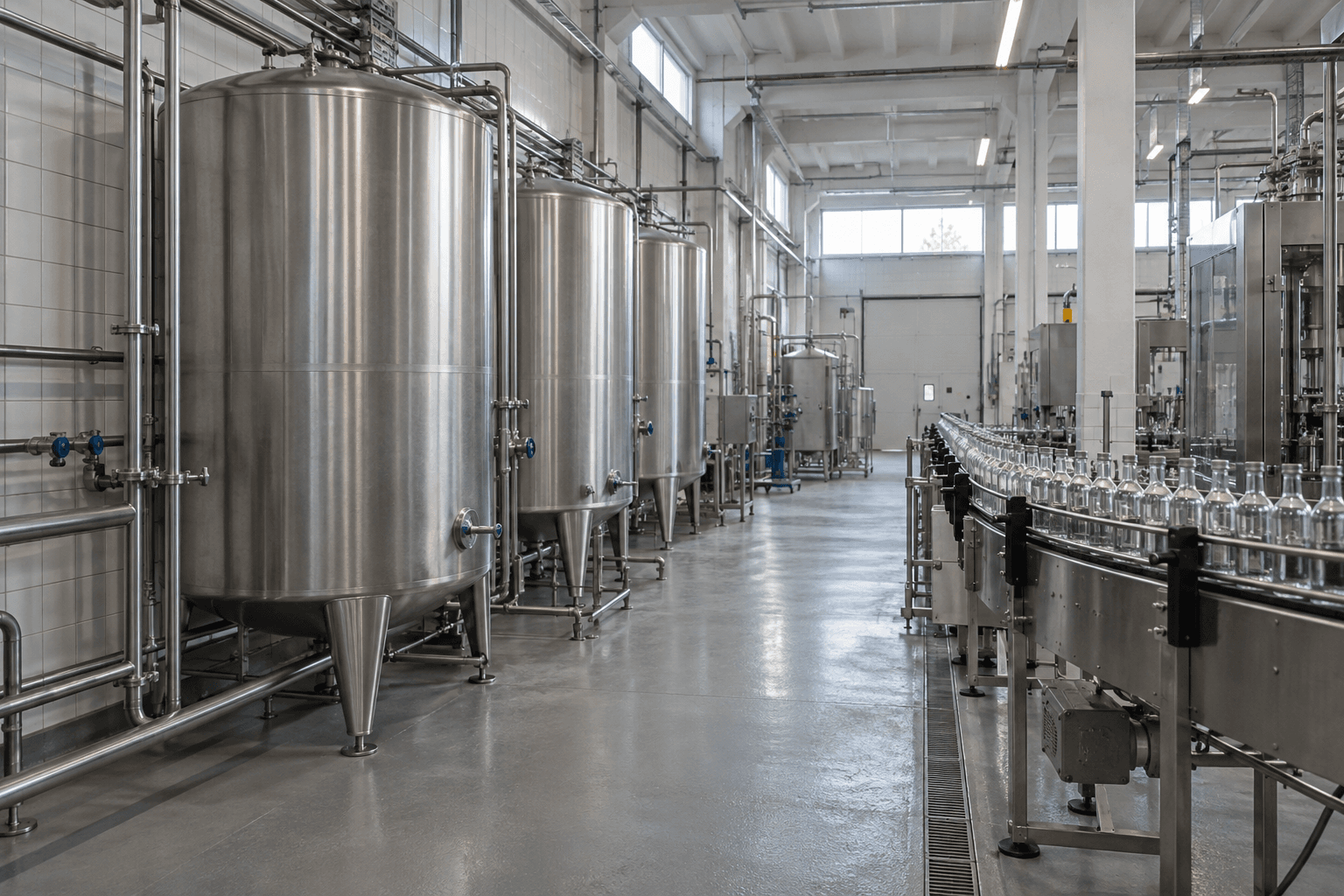
Representative scene of stainless steel tanks and a bottling line in a beverage facility
Representative food & beverage setting.
THE SHORT ANSWER

Where should a food or beverage plant start with chlorine monitoring?

Start with incoming water, storage and utility distribution, where the measurement objective can be clearly defined. Treat ingredient water, product-contact wash water and cleaning systems as separate applications. Confirm chemistry, installation materials and hygienic requirements for each point before selecting a sensor.

Choose the point that answers your operating question.

  1. EVALUATION POINT 1Incoming water

    Understand the incoming conditions.

  2. EVALUATION POINT 2Storage / treatment

    Evaluate the treatment or process change.

  3. EVALUATION POINT 3Plant water users

    Define verification and operator response.

Conceptual monitoring sequence. Final placement, detection limits and control actions must be reviewed for your water and equipment.

01 / APPLICATION PLANNING

Create a water-use map

Separate cooling and utility water from water used as an ingredient or in direct contact with product. Identify where treatment changes the water and where a residual reading would affect a decision. This keeps a successful utility-water installation from becoming an unsupported recommendation for every process in the plant.

02 / APPLICATION PLANNING

Match the measurement to the disinfectant

Record whether the incoming supply uses free chlorine or chloramine and whether the plant adds another treatment chemical. Ask for the exact measurement species supported by the proposed configuration. Do not assume a chlorine sensor measures peracetic acid, ozone or all blended sanitizers.

03 / APPLICATION PLANNING

Build a traceable verification routine

Give each point a clear name, assign a person to review trends and define when reference checks are required. Include sampling access and service isolation in the installation review. Evaluate expected production changes and cleaning exposure before deciding whether equipment can remain in place throughout an operating cycle.

QUESTIONS FROM THE FIELD

Clear answers before you choose.

Does drinking-water certification establish food-contact suitability?

Do not use it as a substitute for a plant-specific materials and hygienic-design review. Confirm the exact equipment and intended installation with the responsible plant team.

Can one analyzer cover wash water and utility water?

Not by assumption. The water matrix, concentration and cleaning conditions differ. Evaluate each duty separately.

Where should breweries begin?

Map the incoming supply, carbon treatment and brewing-water or RO handoff. Determine which residual species needs to be measured before and after treatment.

CONTINUE YOUR RESEARCH

Related monitoring decisions.

LET’S TALK ABOUT YOUR WATER

A better measurement
starts with your site.

Tell us what you need to measure. We’ll help you find the right starting point.

Get a sensor recommendation
Help me choose a sensor ↗