
ENGINEERED FOR WATER. BUILT FOR THE FIELD.
My Halogen Track an order Cloud login
Halogen Systems
CHLORINE MONITORING / APPLICATION GUIDE

Brewery-water chlorine and chloramine monitoring

Plan brewery residual monitoring before and after carbon filtration, with separate checks for chlorine, chloramine and RO feed-water requirements.

Review your monitoring point
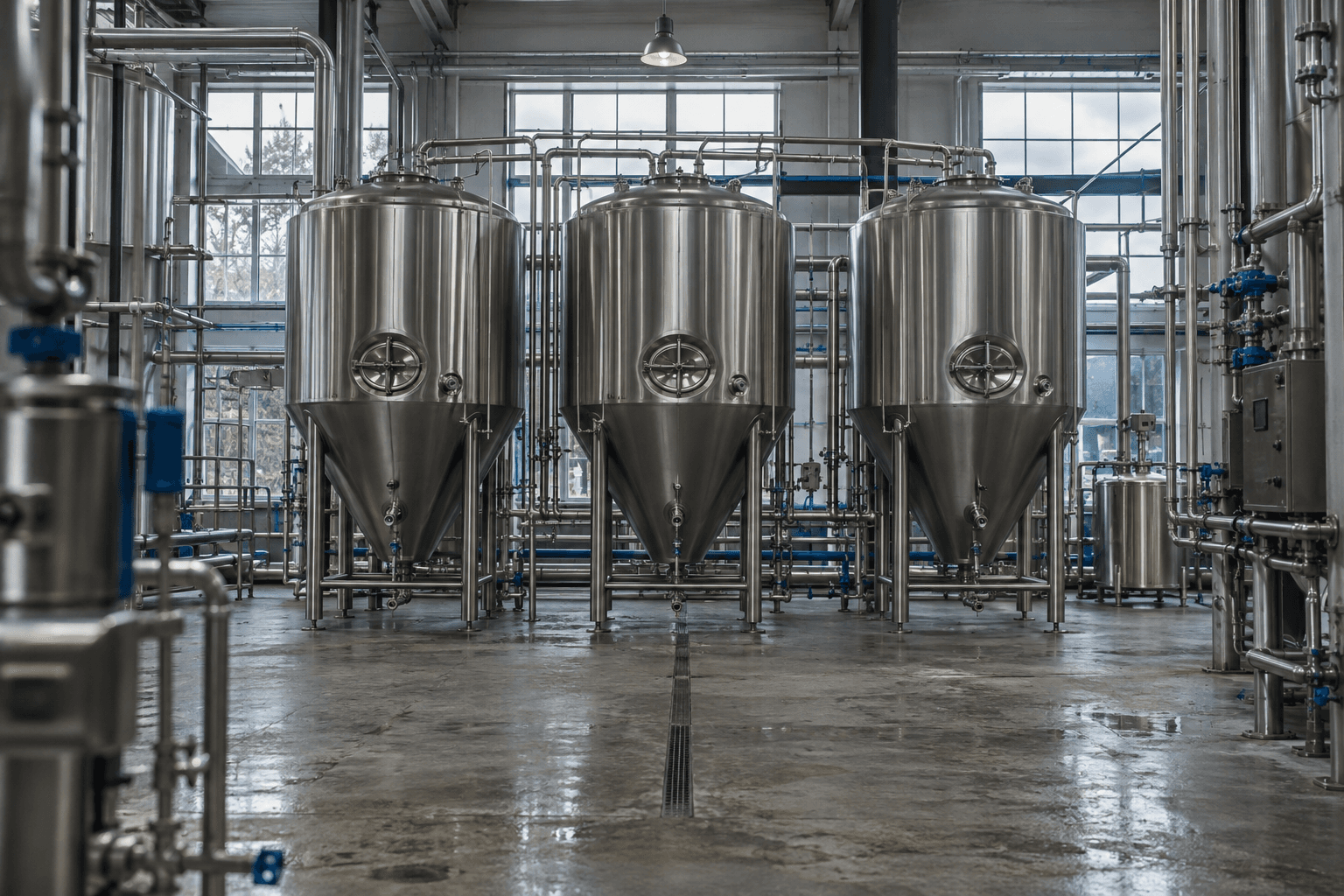
Representative brewery with stainless steel vessels and utility pipework
Representative breweries setting.
THE SHORT ANSWER

How can a brewery continuously monitor chlorine and chloramine?

Identify the municipal disinfectant, then define separate objectives for incoming water and treated brewing water. Select the measurement species accordingly and verify low-level capability after treatment. Continuous trends can improve visibility between checks, but they do not replace a validated water-quality program.

Choose the point that answers your operating question.

  1. EVALUATION POINT 1Municipal supply

    Understand the incoming conditions.

  2. EVALUATION POINT 2Carbon filtration

    Evaluate the treatment or process change.

  3. EVALUATION POINT 3Brewing water / RO

    Define verification and operator response.

Conceptual monitoring sequence. Final placement, detection limits and control actions must be reviewed for your water and equipment.

01 / APPLICATION PLANNING

Understand incoming-water changes

Review the utility’s supplied-water information and any treatment changes that may affect the brewery. Distinguish free chlorine from chloramine when selecting the analyzer. A free-chlorine result should not be interpreted as a complete description of a chloraminated supply.

02 / APPLICATION PLANNING

Verify the carbon-treatment outcome

Consider upstream measurement for loading trends and downstream measurement for breakthrough evaluation. Establish the process requirement with the brewery’s quality team, then assess whether the selected method resolves that level in the treated water. Pair readings with a suitable reference method during commissioning and routine verification.

03 / APPLICATION PLANNING

Connect readings to production decisions

Define who reviews alarms before water is released to the next process. If water feeds an RO system, include the membrane supplier’s requirements in the evaluation. Record service and verification events alongside trends so an apparent process change can be distinguished from an instrument or sampling issue.

QUESTIONS FROM THE FIELD

Clear answers before you choose.

Can a reagent-free analyzer be used in a brewery?

Evaluate it against the brewery’s residual species, required concentration range and installation conditions. Reagent-free operation does not remove verification or service requirements.

Does continuous chlorine monitoring guarantee flavor quality?

No. It contributes one measurement to the brewery’s water and quality program; it does not establish finished-product quality on its own.

Can we stop water automatically on breakthrough?

An engineered control system can be evaluated for that objective. Validate detection, delay, signal failure and actuator response before relying on the arrangement.

CONTINUE YOUR RESEARCH

Related monitoring decisions.

LET’S TALK ABOUT YOUR WATER

A better measurement
starts with your site.

Tell us what you need to measure. We’ll help you find the right starting point.

Get a sensor recommendation
Help me choose a sensor ↗