
Opflow-Article-for-Halogen-Systems-Amperometric-Chlorine-Analyzer.png

Chlorine Analyzers & Water Conservation​

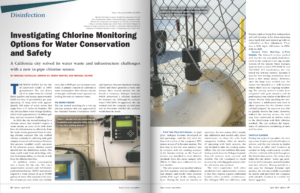
A California city colved its water waste and infrastructure challenges with a new in-pipe chlorine sensor

THE WATER SUPPLY for the City of Lakewood (Calif.) is 100% groundwater. The city draws all of its water from the Central
Basin aquifers and pumps approximately 6,500 acre-feet of groundwater per year, operating 11 deep wells with approximately 180 miles of water mains that range from 4-27 inches in diameter. The city also has three water storage facilities, which hold approximately 13 million gallons, and two treatment facilities.

In 2018, the city started looking for a chlorine sensor that wouldn’t require a waste stream, as some of its wells don’t have the infrastructure to effectively drain the waste stream generated from its existing chlorine analyzer. The city verified chlorine residuals by collecting daily grab samples at several well locations. However, this process wouldn’t notify operators if, for whatever reason, chlorine wasn’t injected into the distribution system. This issue could result from air-locking, chlorine feed pump failure, or a break or leak from the chlorine feed line.

"In 2018, the city started looking for a chlorine sensor that wouldn't require a waste stream, as some of its wells don't have the infrastructure to effectively drain the waste stream generated from its existing chlorine analyzer."
By Michael Santillan, Derwin DY, Derek Nguyen, and Michael Silveri

In addition, water consumption was a factor for the city. The city’s amperometric sensors and N, N-diethyl-p-phenylenediamine (DPD) instruments required a waste stream of up to 69,000 gallons of water. This amounts to 0.2 acre-feet of water per year. At the city’s billable rates, this is $690 per year in non-revenue water. A primary concern in California is water consumption. After almost a decade of drought, California water agencies are looking for ways to conserve water.

The Search Begins

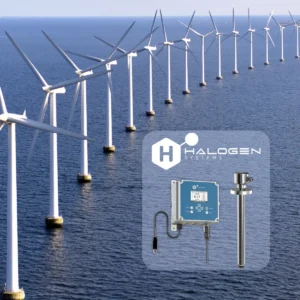
The city started searching for a wet tap chlorine analyzer that was approved by the National Science Foundation (NSF) and American National Standards Institute (ANSI) and didn’t generate a waste side stream. After several months, the city found a company, Halogen Systems, which advertised a chlorine analyzer for seawater use. Although the analyzer wasn’t NSF/ANSI 61-approved, the city worked with the company on trial projects to determine whether the analyzer would meet its needs.

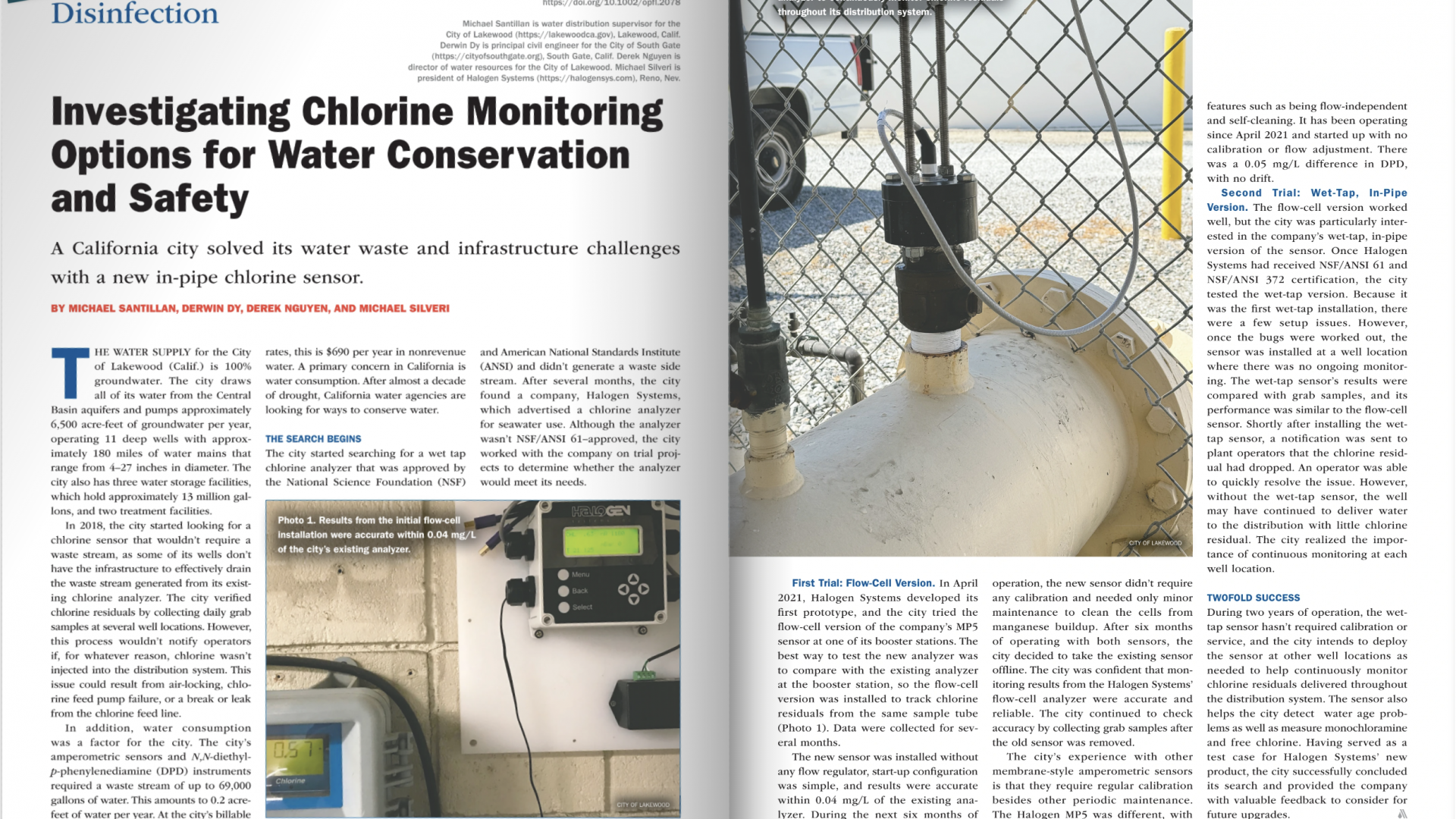
First Trial: Flow-Cell Version. In April 2021, Halogen Systems developed its first prototype, and the city tried the flow-cell version of the company’s MPS sensor at one of its booster stations. The best way to test the new analyzer was to compare with the existing analyzer at the booster station, so the flow-cell version was installed to track chlorine residuals from the same sample tube (Photo 1). Data were collected for several months.
The new sensor was installed without any flow regulator, start-up configuration was simple, and results were accurate within 0.04 mg/L of the existing ana-lyzer. During the next six months of operation, the new sensor didn’t require any calibration and needed only minor maintenance to clean the cells from manganese buildup. After six months of operating with both sensors, the city decided to take the existing sensor offline. The city was confident that monitoring results from the Halogen Systems’ flow-cell analyzer were accurate and reliable. The city continued to check accuracy by collecting grab samples after the old sensor was removed. The city’s experience with other membrane-style amperometric sensors is that they require regular calibration besides other periodic maintenance.
The Halogen MP5 was different, with features such as being flow-independent and self-cleaning. It has been operating since April 2021 and started up with no calibration or flow adjustment. There was a 0.05 mg/L difference in DPD, with no drift.

Second Trial: Wet-Tap, In-Pipe Version. The flow-cell version worked well, but the city was particularly interested in the company’s wet-tap, in-pipe version of the sensor. Once Halogen Systems had received NSF/ANSI 61 and NSF/ANSI 372 certification, the city tested the wet-tap version. Because it was the first wet-tap installation, there were a few setup issues. However, once the bugs were worked out, the sensor was installed at a well location where there was no ongoing monitoring. The wet-tap sensor’s results were compared with grab samples, and its performance was similar to the flow-cell sensor. Shortly after installing the wet-tap sensor, a notification was sent to plant operators that the chlorine residual had dropped. An operator was able to quickly resolve the issue. However, without the wet-tap sensor, the well may have continued to deliver water to the distribution with little chlorine residual. The city realized the importance of continuous monitoring at each well location.

Twofold Success

During two years of operation, the wet-tap sensor hasn’t required calibration or service, and the city intends to deploy the sensor at other well locations as needed to help continuously monitor chlorine residuals delivered throughout the distribution system. The sensor also helps the city detect water age problems as well as measure monochloramine and free chlorine. Having served as a test case for Halogen Systems’ new product, the city successfully concluded its search and provided the company with valuable feedback to consider for future upgrades.

"During two years of operation, the wet-tap sensor hasn't required calibration or service, and the city intends to deploy the sensor ... throughout the distribution system."
By Michael Santillan, Derwin DY, Derek Nguyen, and Michael Silveri

Viele Anwendungen profitieren von einem selbstreinigenden, wartungsarmen Analysator

Die Technologie von Halogen trägt zur Aufrechterhaltung stabiler Kalibrierungen bei und verringert gleichzeitig den Wartungsaufwand. Diese Kombination macht den MP5™ zu einer guten Option für Überwachungsstationen, bei denen andernfalls ein ständiger Wechsel des Personals für Bedienereingriffe erforderlich wäre. In Kombination mit Ferntelemetrieoptionen kann der MP5™ die Grundlage für IoT-Überwachungslösungen bilden. Siehe unten für Anwendungsbeispiele.

Rectangle 440

FERNSPEICHER

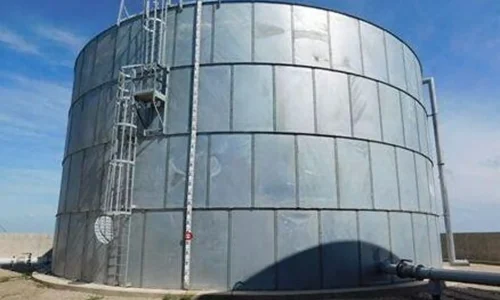
Der MP5™ Chlorsensor wird direkt in ein Trinkwasserreservoir gehängt und kann über eine optionale Mobiltelefonie Bericht erstatten. Wenn der MP5™ mit einem optionalen Batteriesatz betrieben wird, kann er in vordefinierten Intervallen Proben nehmen und arbeitet einen Monat lang ohne Wartungseingriff.

Rectangle 442

END-OF-LINE-PRÜFUNG

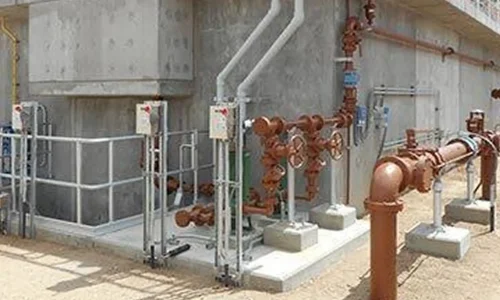
Kommunen, die derzeit einen Lastwagen einsetzen müssen, um mit Sicherheit zu wissen, dass die Haushalte am Ende der Leitung einen angemessenen PPM-Wert erhalten, können die Kosten senken und die Genauigkeit erhöhen, indem sie einen MP5™ direkt in die Wasserleitung der Nachbarschaft einbauen. Die Daten können über mobile Telemetrie übertragen werden.

Rectangle 444

NETZÜBERWACHUNG

Wasseralterung und andere Degradationsprobleme in einem Verteilungsnetz können durch den Einsatz von MP5™-Analysatoren an den gewünschten Stellen im System erkannt werden. Die Bediener können Temperatur, Leitfähigkeit, pH-Wert und sogar ORP unabhängig von Durchfluss oder Druck (bis zu 10,5 bar) über Ferntelemetrieoptionen verfolgen.

Rectangle 446

TRINKWASSER FÜR KREUZFAHRTSCHIFFE

Um sich vor Legionellen zu schützen, müssen Kreuzfahrtunternehmen den Chlorgehalt in ihren Frischwassertanks überwachen, sich vor Verunreinigungen durch Quellenanbieter schützen und Proben an den Zapfstellen nehmen. Die SensiCLĒNE™-Technologie und die flexiblen Installationsoptionen des MP5™-Analysegeräts ermöglichen es den Betreibern, Lösungen zu entwickeln, die in dieser schwierigen Umgebung funktionieren.

Rectangle 448

ÜBERWACHUNG VON WASSERTANKWAGEN IM LUFTVERKEHR

Studien im Vereinigten Königreich haben gezeigt, dass Wassertankwagen eine Quelle für die Verunreinigung von Trinkwasser in Fluglinien sind, aber die Überwachung dieser mobilen Nachfülleinheiten ist ein sehr manueller Prozess, der in einer hektischen Umgebung die Konsistenz erschwert. Der MP5™ ist selbstreinigend, langlebig und durchflussunabhängig und kann die Grundlage für eine quellenseitige Lösung sein.
Rectangle 450

EWR-ÜBERWACHUNG

Umweltgerechte Wasseraufbereitung (EWR) ist ein heißes Thema in Gebieten, die mit Wasserknappheit konfrontiert sind, aber auch abgelegene Sammeltanks können zu Hotspots für alle Arten von Bakterienwachstum werden. Unter anderem dank SensiCLĒNE™ ist der MP5™ unbeeinflusst von Durchfluss und Trübung, was ihn zu einer guten Wahl für den Aufbau eines robusten, wartungsarmen Überwachungssystems macht.
Scroll to Top