
Real Talk about Continuous Monitoring Chlorine Analyzer Claims
- Startseite
- Real Talk about Continuous Monitoring Chlorine Analyzer Claims
Real Talk about Continuous Monitoring Chlorine Analyzer Claims
- Startseite
- Real Talk about Continuous Monitoring Chlorine Analyzer claims
Real Talk about "Continuous Monitoring" Chlorine Analyzer Claims
Some manufacturers of online chlorine analyzers are making bold claims that their sensors allow ‘continuous monitoring for real-time decision-making’ which begs the question “What do they mean by ‘continuous monitoring’?” Hint: Their definition might not match your definition…or the definition. At Halogen Systems, we think about monitoring in terms of cycle times: How fast can the unit take, measure, and record a parameter data point? In the case of a wet-tap drinking water installation (retractable in-pipe deployment), the Halogen MP5 wet-tap chlorine analyzer is situated directly inside the water flow, utilizing its three bare electrodes to record a measurement. The analyzer then combines this reading with data from its onboard pH and temperature sensors. Finally, the MP5™ reports five parameters (free chlorine, pH, temperature, conductivity, and RapidORP™) via the display/controller unit and then takes another measurement. From measurement to reporting, the cycle takes a bit less than 50 seconds. If you’d rather think of cycle time in terms of Cycles Per Hour (CPH), the MP5™ runs at 72cph {(60/50)x60}.
Per hour, the Halogen MP5™ online chlorine analyzer takes 3X the measurements of Free Chlorine as the Hach CL10 chlorine analyzer.
Continuous Monitoring" vs. Cycles per Hour (CPH)
So, considering the above, you’d think that any company touting “continuous monitoring for real-time decision-making” would have a pretty high CPH. Interestingly, the product page for the Hach CL10 shows the response time for Free Chlorine as “100 s[econds] or less for 90% change (T90) at a stable temperature and pH”. Those response times put the and the CLF10 (free chlorine) at under 26 cph {(60/140)x60}. Per hour, the MP5™ chlorine analyzer takes 3X the samples of Free Chlorine as the Hach CL10 analyzers.
“Any operator looking for “Continuous Monitoring” should pick an analyzer with a high cph (Cycles per Hour) ratio, gathering as many actual data points over time as possible to spot trends quickly.” A slow CPH rate is often cloaked by using a plotted graph that connects data points and applies some smoothing. But those smooth lines are inferred data points, not actual data. Any operator looking for “Continuous Monitoring” should pick an analyzer with a high cph, gathering as many actual data points over time as possible to spot trends quickly.
“Continuous monitoring” generates actionable data at a high frequency, but the sheer number of data points is only part of the reason diligent operators should spec an MP5™ online chlorine monitor.
(Wo & Wann) ≥ (Wie oft)
Die empfindlichen Membranen der CL10-Chloranalysatoren von Hach werden bei einem Druck von mehr als 0,5 bar (7 psi) beschädigt. Daher sind Rohrleitungen zur Durchflussregelung erforderlich, um die Drücke und Durchflüsse konstant zu halten, ohne dass Spitzen, Tropfen oder Vibrationen auftreten. Dies führt dazu, dass der Sensor oft viele Meter von der Einführungsstelle des Probenahmerohrs entfernt ist. Um Wasser von der Probenahmestelle zu testen, muss das Wasser durch all diese Schläuche zum Sensor fließen, bevor eine Messung durchgeführt werden kann.
“… the MP5™ can be deployed directly in a water pipe… at pressures ranging from -.07 to 10 bar (-10.15 to 147 psi) and at flows from 0 to 4.5 M/Sec (14.7 F/Sec).” Unlike those control-board flow-controlled analyzers, the MP5™ can be deployed directly in a water pipe (and being certified for NSF-61 installations, it can be inserted into drinking water pipes with no required waste stream) at pressures ranging from -.07 to 10 bar (-10.15 to 147 psi) and at flows from no-flow to 4.5 M/Sec (14.7 F/Sec).
The MP5™ chlorine analyzer’s ability to deploy directly in the water pipe allows operators to know 5 parameters of water quality at that precise spot inside the pipe (or tank) at 72cph, making decisions on a constant stream of accurate data rather than making inferences on water-data that could be hundreds of feet out of date before a slow cycles-per-hour ratio ever kicked in. If an operator wants to know exactly what the chlorine residuals are in the pipe often enough to spot trends quickly, that operator wants an MP5™.
Kontinuierliche Genauigkeit bei der kontinuierlichen Überwachung
A high cycle rate might not matter if the accuracy of the reporting is suspect. However, even in this area, the MP5™ is ahead of the pack. A recent pilot program by San Jose Water (SJW) compared the Halogen MP5™ Chlorine Analyzer to the Hach CLT10 analyzer, using a Hach SL1000 as a reference. This test was organized because the existing equipment required constant calibration and maintenance, and it suffered deviation at low residual concentrations. Over the course of a month, the Hach CLT average accuracy was 87%, while the Halogen MP5™ averaged 93% accuracy.
Over the course of a month, the Hach CLT average accuracy was 87%, while the Halogen MP5™ averaged 93% accuracy.
Wirkungsgrade (Anzahl der Parameter @ Zyklen pro Stunde)
Not only will a MP5™ accurately report on free chlorine at 72cph, but the same unit will report an additional 4 parameters (pH, temperature, conductivity, and RapidORP™) at the same time. The MP5™ does 5 parameters at 72cph, while the Hach CL10 does 1 parameter at 36cph (or 26 cph).
“The MP5™ does 5 parameters at 72cph, while the Hach CL10 does 1 parameter at 36cph (or 26 cph).
This multi-parameter reporting makes a single MP5™ an incredibly efficient means of gathering near-time water quality data (from inside the pipes). The MP5™ efficiently and accurately monitors multiple parameters at a high CPH, making it a good choice for true continuous chlorine monitoring to make on-time water quality decisions
Wählen Sie das MP5™ für die kontinuierliche Chlorüberwachung
Die Ingenieure von Halogen Systems neigen nicht zu pauschalen Aussagen (fragen Sie einfach den Werbetexter), aber sie sind der festen Überzeugung, dass Betreiber, die eine "kontinuierliche Überwachung" wünschen, auf Analysatoren mit einem hohen CPH-Wert und nachgewiesener Genauigkeit bestehen sollten, die nach Möglichkeit direkt in der Rohrleitung installiert werden. Nur das MP5™ erfüllt diese Kriterien.
“Operators who want “continuous monitoring” should insist on analyzers with a high CPH and proven accuracy, located directly in the pipe if at all possible. Only the MP5™ meets those criteria.” Halogen Systems MP5™ online chlorine analyzer is the best choice for continuous chlorine monitoring. Only the MP5™ can boast such high cycle times, eschewing maintenance while maintaining stable calibration. Only the MP5™ can installed directly in a drinking water pipe, continuously analyzing chlorine residual at fast enough cycle rates that decisions can be made based on data from water actually flowing in the pipe.
Weitere Informationen darüber, wie ein MP5™ zur Grundlage für Echtzeit-Entscheidungen auf der Grundlage einer kontinuierlichen Überwachung in Echtzeit werden kann, finden Sie auf unserer MP5™-Detailseite oder wenden Sie sich an einen Vertreter.
Viele Anwendungen profitieren von einem selbstreinigenden, wartungsarmen Analysator
Die Technologie von Halogen trägt zur Aufrechterhaltung stabiler Kalibrierungen bei und verringert gleichzeitig den Wartungsaufwand. Diese Kombination macht den MP5™ zu einer guten Option für Überwachungsstationen, bei denen andernfalls ein ständiger Wechsel des Personals für Bedienereingriffe erforderlich wäre. In Kombination mit Ferntelemetrieoptionen kann der MP5™ die Grundlage für IoT-Überwachungslösungen bilden. Siehe unten für Anwendungsbeispiele.
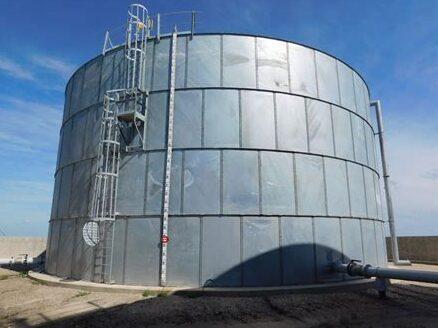
FERNSPEICHER
Der MP5™ Chlorsensor wird direkt in ein Trinkwasserreservoir gehängt und kann über eine optionale Mobiltelefonie Bericht erstatten. Wenn der MP5™ mit einem optionalen Batteriesatz betrieben wird, kann er in vordefinierten Intervallen Proben nehmen und arbeitet einen Monat lang ohne Wartungseingriff.
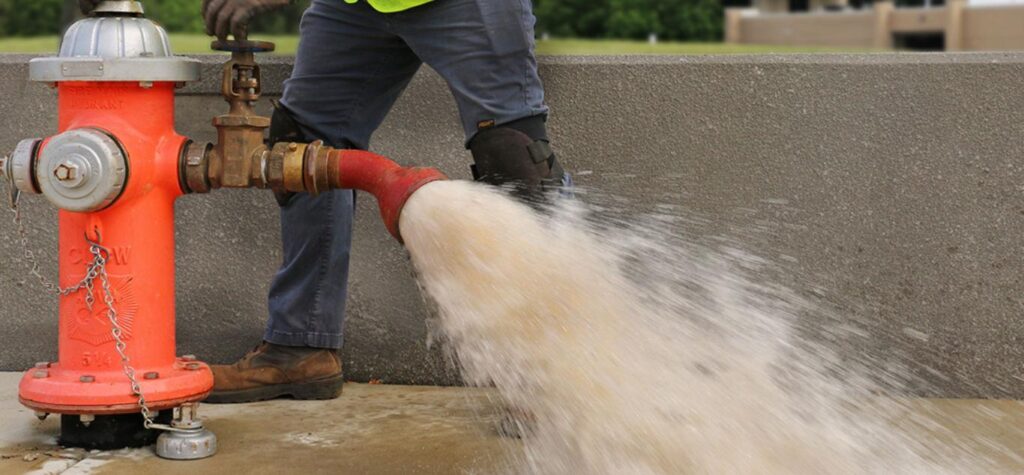
END-OF-LINE-PRÜFUNG
Kommunen, die derzeit einen Lastwagen einsetzen müssen, um mit Sicherheit zu wissen, dass die Haushalte am Ende der Leitung einen angemessenen PPM-Wert erhalten, können die Kosten senken und die Genauigkeit erhöhen, indem sie einen MP5™ direkt in die Wasserleitung der Nachbarschaft einbauen. Die Daten können über mobile Telemetrie übertragen werden.
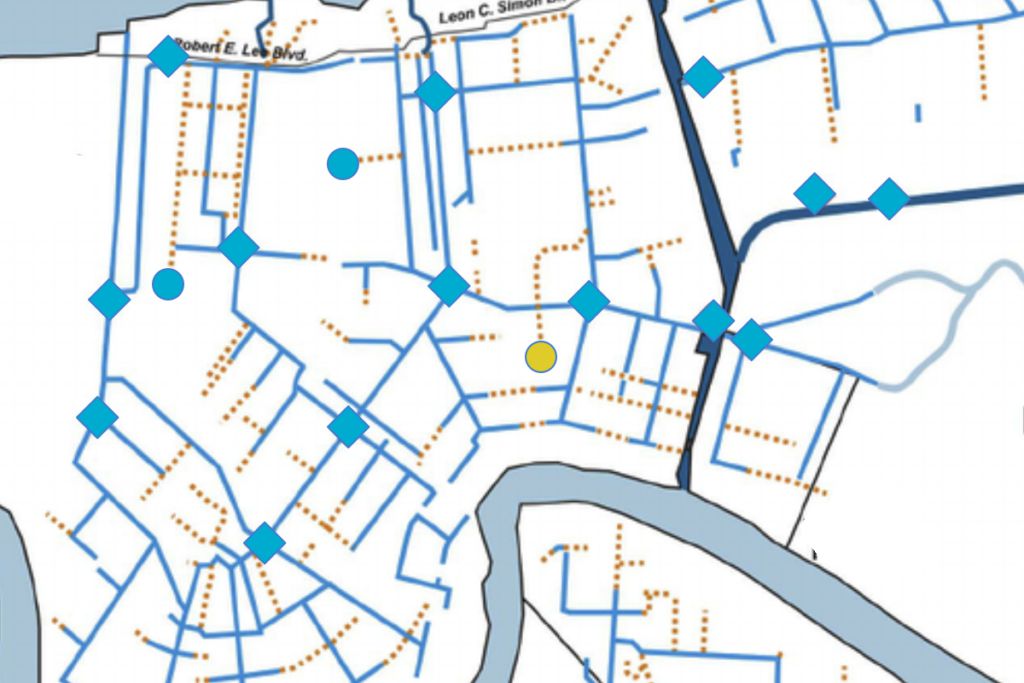
NETZÜBERWACHUNG
Wasseralterung und andere Degradationsprobleme in einem Verteilungsnetz können durch den Einsatz von MP5™-Analysatoren an den gewünschten Stellen im System erkannt werden. Die Bediener können Temperatur, Leitfähigkeit, pH-Wert und sogar ORP unabhängig von Durchfluss oder Druck (bis zu 10,5 bar) über Ferntelemetrieoptionen verfolgen.

TRINKWASSER FÜR KREUZFAHRTSCHIFFE
Um sich vor Legionellen zu schützen, müssen Kreuzfahrtunternehmen den Chlorgehalt in ihren Frischwassertanks überwachen, sich vor Verunreinigungen durch Quellenanbieter schützen und Proben an den Zapfstellen nehmen. Die SensiCLĒNE™-Technologie und die flexiblen Installationsoptionen des MP5™-Analysegeräts ermöglichen es den Betreibern, Lösungen zu entwickeln, die in dieser schwierigen Umgebung funktionieren.

TRINKWASSER FÜR KREUZFAHRTSCHIFFE
Um sich vor Legionellen zu schützen, müssen Kreuzfahrtunternehmen den Chlorgehalt in ihren Frischwassertanks überwachen, sich vor Verunreinigungen durch Quellenanbieter schützen und Proben an den Zapfstellen nehmen. Die SensiCLĒNE™-Technologie und die flexiblen Installationsoptionen des MP5™-Analysegeräts ermöglichen es den Betreibern, Lösungen zu entwickeln, die in dieser schwierigen Umgebung funktionieren.
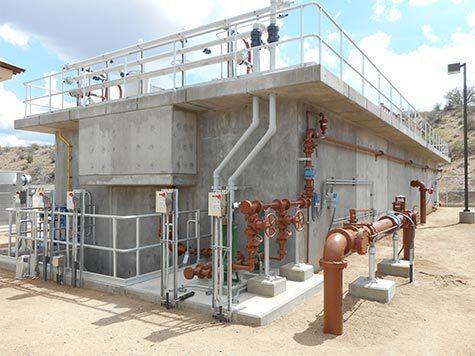
EWR-ÜBERWACHUNG
Umweltgerechte Wasseraufbereitung (EWR) ist ein heißes Thema in Gebieten, die mit Wasserknappheit konfrontiert sind, aber auch abgelegene Sammeltanks können zu Hotspots für alle Arten von Bakterienwachstum werden. Unter anderem dank SensiCLĒNE™ ist der MP5™ unbeeinflusst von Durchfluss und Trübung, was ihn zu einer guten Wahl für den Aufbau eines robusten, wartungsarmen Überwachungssystems macht.
