Chlorine Monitoring System for Distribution Networks
Monitor chlorine residual at critical points throughout your distribution system — dead ends, water towers, booster stations, and system hot spots. Real-time data from every corner of your network.
Quick Answer
How do utilities monitor chlorine residual in distribution systems?
Operators Are Blind to Distribution Levels
Maintaining safe chlorine levels at the far reaches of a distribution network is a constant challenge. Water ages as it travels, leading to chemical degradation that often goes unnoticed until a customer complaint arrives or a compliance sample fails.
Relying on infrequent manual grab samples provides only a snapshot in time. Without continuous monitoring, operators are essentially flying blind to the chlorine drops occurring at tap levels in dead ends and storage tanks.
Continuous Monitoring with Halogen Sensors
Install at Dead Ends
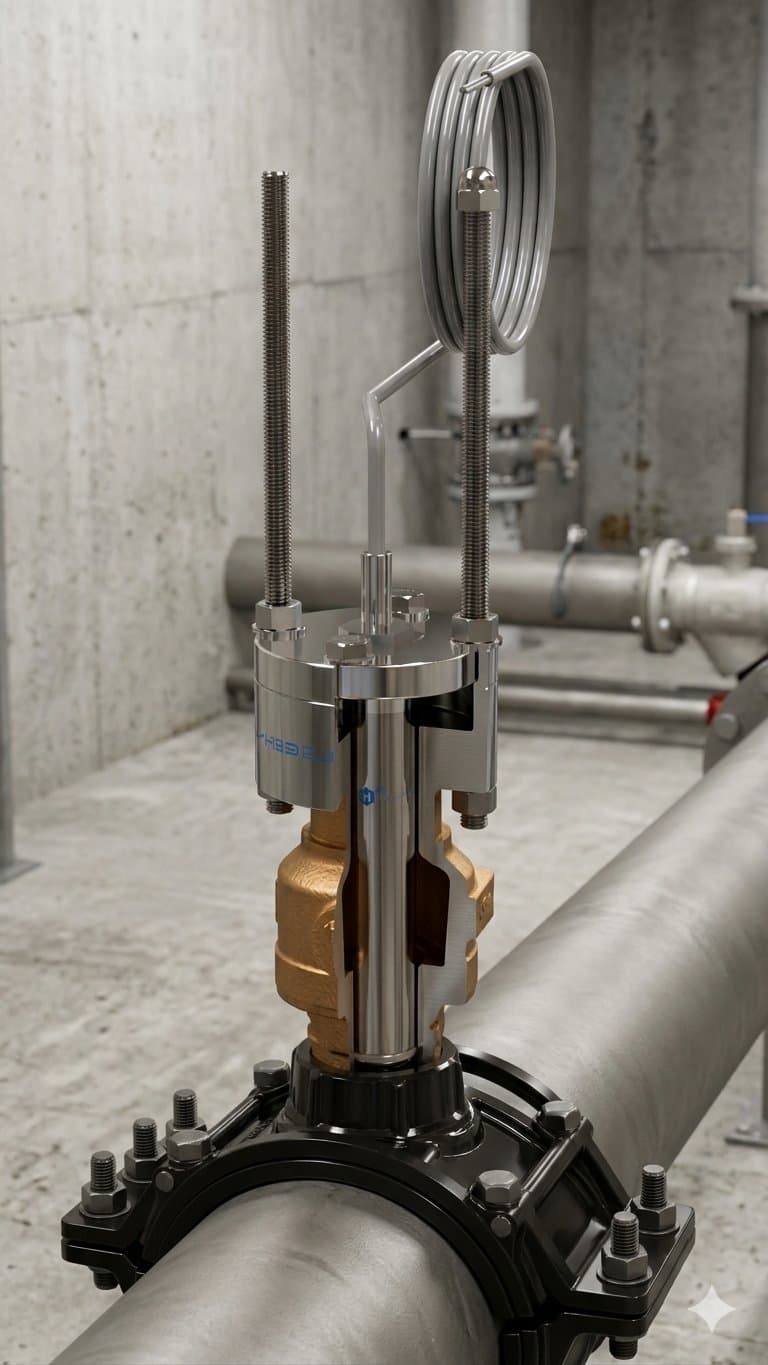
Our sensors are completely flow independent. This allows for accurate monitoring in stagnant water areas like dead ends where traditional sensors fail.
Battery + BTSB Smart Box
Full autonomy via battery power and the BTSB Smart Box. Choose BTSB-IoT for cellular cloud reporting, BTSB-420 for Sensus AMI integration, or base BTSB with Modbus RTU for third-party gateways. No power or comm cables required.
Save 70,000 Gallons
Traditional sensors require a constant waste stream. Halogen's reagentless technology eliminates the need for discharge, saving massive amounts of water.
Choosing the Right Configuration
Power Available
Use the D20 controller for a local display, Modbus/Ethernet/BACnet connectivity, and alarm relays. The D20 is available in multiple communication variants: base, -DB (Modbus RTU), -ENET (Ethernet/IP), -BNET (BACnet), -OTA (Cellular NA), -OTA-EU (Cellular EMEA).
No Power Available
Use battery + BTSB Smart Box with a Low Power sensor. Do NOT use the D20 — it draws too much power for battery operation. Choose BTSB-IoT for cellular, BTSB-420 for Sensus AMI, or base BTSB for Modbus/Bluetooth.
“We deployed Halogen sensors at 12 dead-end locations and identified chlorine loss issues within hours that we hadn't caught in years of weekly grab sampling. It changed how we manage our entire network.”
Recommended Products
The essential toolkit for distribution monitoring.
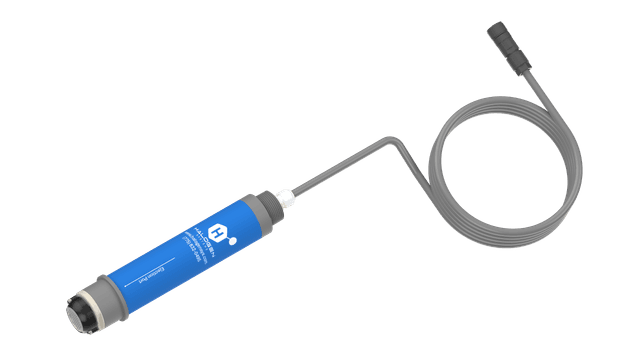
MP5 Free Chlorine Sensor
The industry standard for reagentless chlorine monitoring. Built for longevity and accuracy in harsh environments.
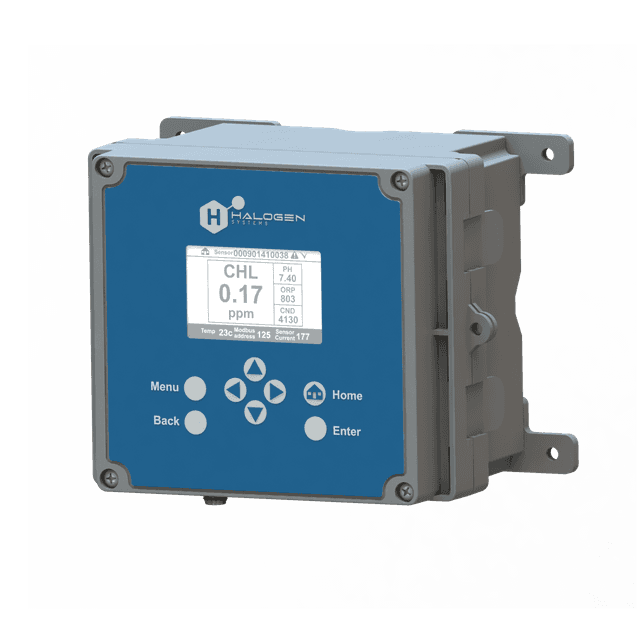
BTSB Smart Box
Battery-powered connectivity hub for remote and distribution sites. Available as BTSB-IoT (cellular), BTSB-420 (Sensus AMI), or base BTSB (Bluetooth/Modbus). Pair with Low Power sensor and battery for fully autonomous operation.
Frequently Asked Questions
Can chlorine sensors work at dead ends with zero or very low flow?
Yes. Halogen amperometric sensors are flow independent — they measure accurately in zero-flow or variable-flow conditions, making them ideal for dead ends, storage tanks, and remote reservoirs where flow is minimal or intermittent.
How do utilities monitor chlorine residual in remote distribution locations without power?
Halogen sensors pair with the battery-powered BTSB Smart Box for autonomous operation. The BTSB-IoT variant transmits readings over LTE/4G cellular to a cloud dashboard. The BTSB-420 integrates with Sensus FlexNet AMI networks. A single battery charge provides 6 months of unattended operation — no utility power or communications infrastructure required. Always specify the Low Power sensor version for battery installations.
How much water waste does continuous chlorine monitoring eliminate?
Traditional reagent-based analyzers require a continuous waste stream of approximately 70,000 gallons per sensor per year. Halogen direct in-pipe sensors eliminate this entirely — saving water, energy, and sewer connection costs.
What is the cost to operate a Halogen distribution monitoring sensor?
The Halogen MP5 sensor costs as low as $185 per year to operate (SensiCLENE cleaning beads at $35/yr plus a pH sensor at $295 every 1–2 years) — compared to $2,328 for online DPD systems, plus roughly $490 per year in non-revenue waste water the MP5 eliminates. That is a saving of roughly $2,143 per sensor per year in operating cost, or $10,715 over five years.
What certifications do Halogen distribution sensors carry?
Halogen MP5 sensors are NSF/ANSI 61 certified for direct contact with drinking water, EPA Method 334.0 compliant, and BABA compliant. They are approved for use in drinking water distribution systems and eligible for regulatory compliance reporting.
Start monitoring your distribution system.
Get expert advice on sensor placement and ROI calculation for your specific utility network.